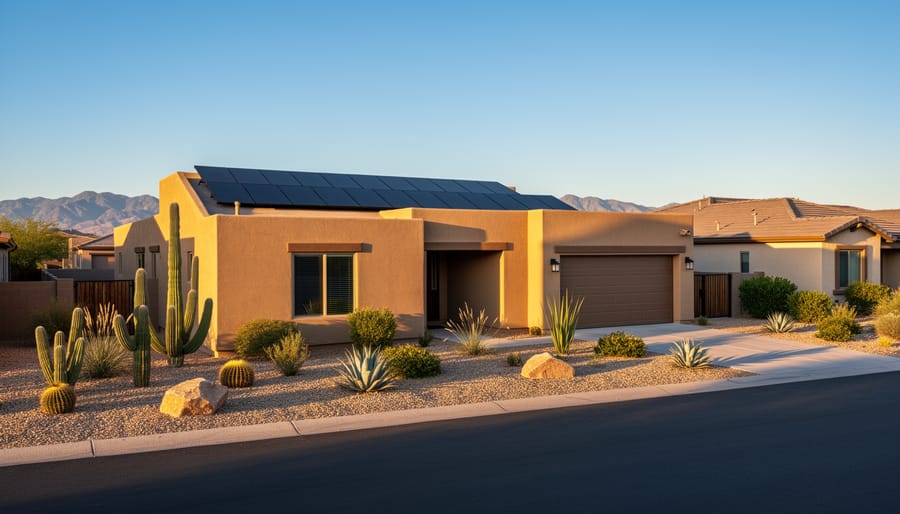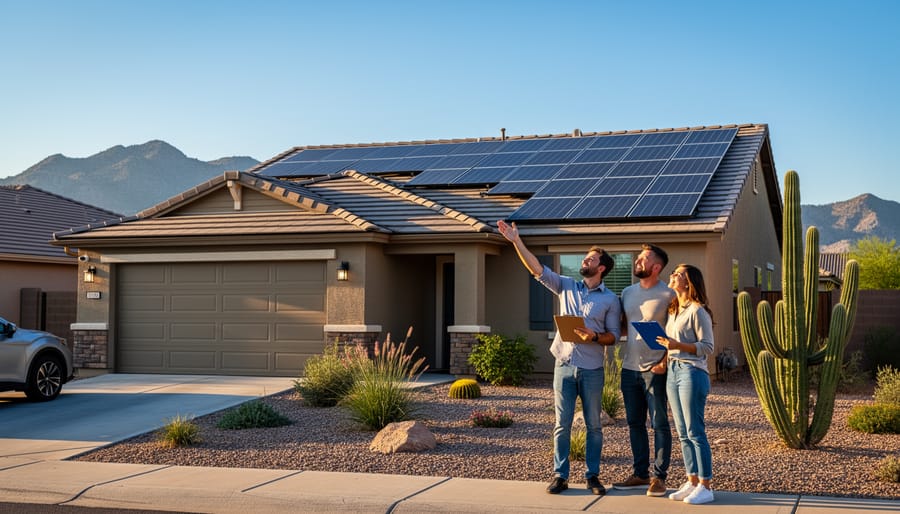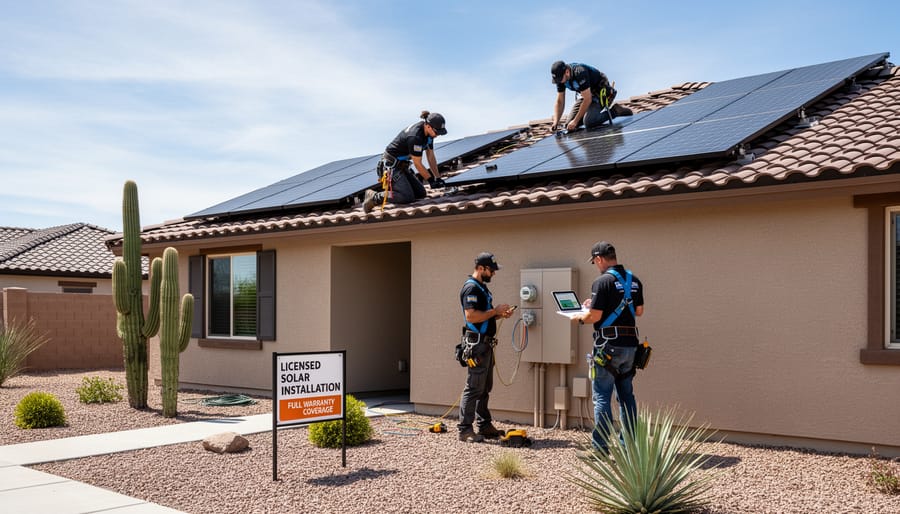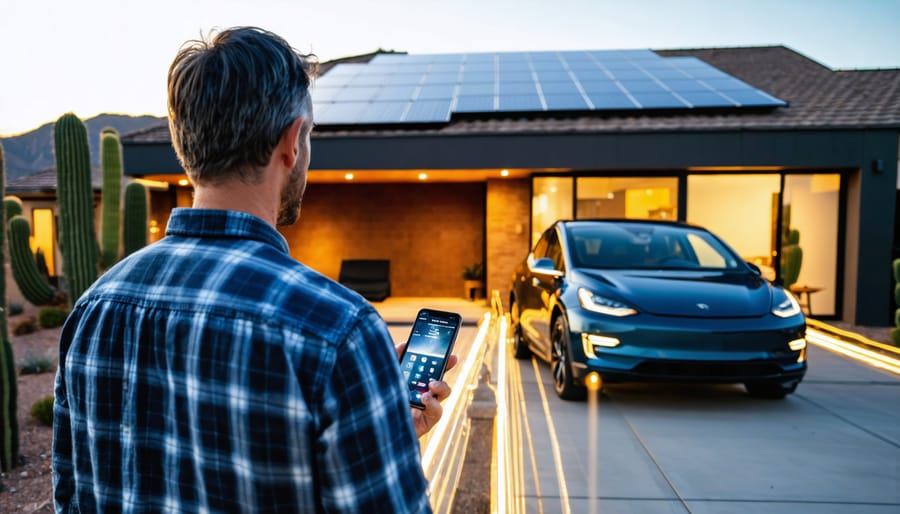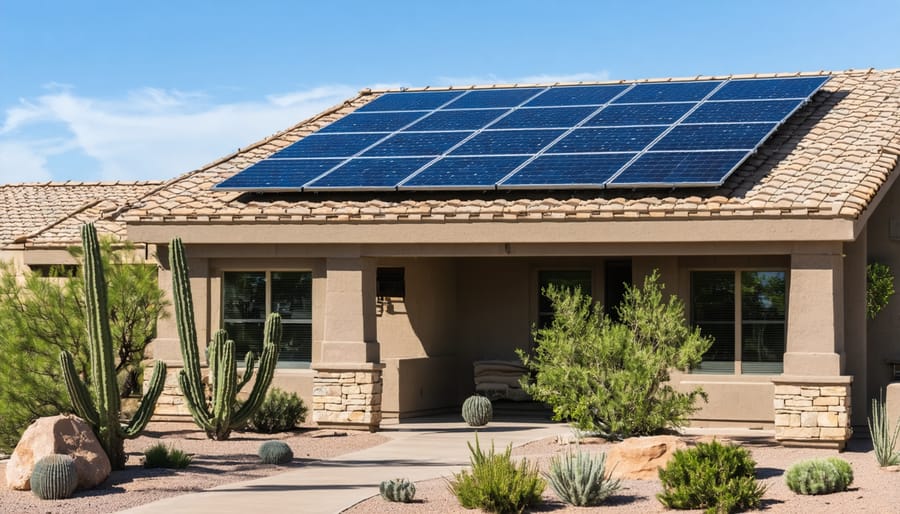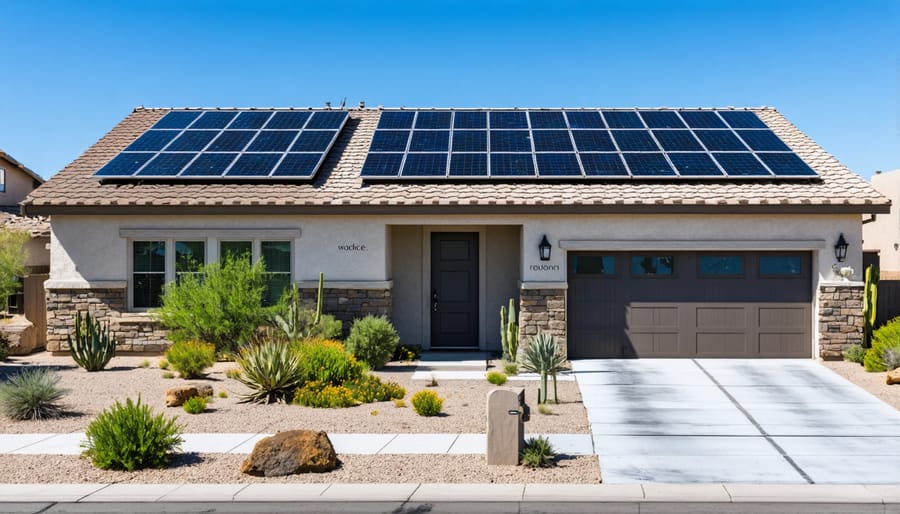
Wide environmental shot of an Arizona stucco house with rooftop solar panels at golden hour, desert landscaping with cacti in front, neighboring homes and distant mountains softly visible in the background.

Why Solar Panels Could Make or Break Your Arizona Home Purchase

Request a complete solar system transfer agreement before closing on any Arizona home with existing panels, ensuring you understand ownership terms, warranty transfers, and any outstanding lease or power purchase agreement obligations. Arizona’s robust solar infrastructure means approximately one in four homes includes photovoltaic systems, making due diligence essential for protecting your investment, as outlined in comprehensive property guidance resources like propertysaviour.co.uk.

Verify the system’s age, performance history, and maintenance records through the seller’s monitoring data—panels typically maintain 80-85% efficiency after 25 years, but poorly maintained systems underperform significantly. Ask your real estate agent to include solar equipment inspection clauses in your purchase contract, and consult with solar energy basics resources to understand system components and expected output for your property size.

Calculate the true financial impact by reviewing at least 12 months of utility bills showing actual energy costs and solar generation credits under Arizona’s net metering policies. If the home lacks solar, obtain pre-qualification quotes from certified installers before closing—many Arizona buyers negotiate solar installation costs into their mortgage, capitalizing on the 30% federal tax credit while increasing property value by an average of 4.1%.

Confirm all permits, interconnection agreements, and utility approvals are current and transferable, as incomplete documentation can delay your ability to benefit from the system immediately. Partner with experienced solar professionals who understand Arizona’s unique regulations, monsoon-related installation considerations, and HOA requirements that affect both existing systems and new installations throughout your homebuying journey.

Modern Arizona home with solar panels installed on tile roof and desert landscaping
Solar panels are increasingly common on Arizona homes, making them an important consideration for homebuyers in the state’s real estate market.

The Arizona Homebuyer’s Solar Advantage

How Solar Impacts Your Home’s Market Value

Solar installations significantly boost property values across Arizona, making them an attractive feature for homebuyers and a smart investment for sellers. Recent data from Zillow reveals that homes with solar panels sell for approximately 4.1% more than comparable non-solar properties. In Arizona’s competitive real estate market, this translates to thousands of dollars in additional equity.

The Arizona housing market shows particularly strong demand for solar-equipped homes. Properties with existing solar systems spend an average of 13% less time on the market compared to traditional homes, according to research from the National Renewable Energy Laboratory. This accelerated sale timeline reflects growing buyer awareness of the benefits of home solar, including reduced utility costs and energy independence.

Local real estate professionals report that solar installations have become a significant selling point, especially among millennial and Gen Z buyers who prioritize sustainability. Homes with owned solar systems—rather than leased equipment—command premium pricing and attract more serious offers. The appreciation rate continues trending upward as electricity costs rise and environmental consciousness grows.

One Arizona homeowner shared their experience: “When we listed our Scottsdale home with a three-year-old solar installation, we received multiple offers within days. The solar system became our biggest competitive advantage, and we sold for 5% above asking price.”

For homebuyers, properties with solar represent both immediate savings and long-term value appreciation, making them increasingly sought-after investments in Arizona’s evolving real estate landscape.

Understanding Arizona’s Solar Tax Credits and Incentives for New Homeowners

Arizona homebuyers have access to substantial financial incentives that make solar energy an increasingly attractive investment. Understanding these benefits is essential when evaluating properties with existing solar installations or planning to add solar after purchase.

The federal Investment Tax Credit (ITC) remains the most significant incentive, offering 30% of the total system cost as a tax credit through 2032. For new homeowners purchasing a property with solar panels, the transferability of this credit depends on timing and ownership structure. If you’re buying a home where solar is already installed and owned (not leased), the previous owner typically claimed the ITC. However, homeowners who install solar after purchasing their property can claim the full federal credit on their tax return.

Arizona offers additional state-level advantages that enhance solar’s value proposition. The state provides a sales tax exemption on solar equipment purchases, immediately reducing upfront costs. Property owners also benefit from solar equipment being exempt from property tax assessments, meaning your home’s increased value from solar installation won’t raise your property taxes.

Many utility companies throughout Arizona offer net metering programs, allowing homeowners to receive credits for excess energy their systems produce and send back to the grid. These credits offset electricity costs during periods of lower solar production, maximizing your long-term savings.

When evaluating homes with existing solar systems, it’s important to verify whether current incentive agreements transfer with ownership. Solar Concepts can help homebuyers navigate these financial considerations, ensuring you maximize available benefits whether inheriting an existing system or planning a new installation.

Critical Questions to Ask When Buying a Home with Existing Solar

Couple reviewing solar panel documentation and monitoring information during home purchase process
Homebuyers should carefully review solar system documentation, including ownership status, warranties, and performance history before finalizing their purchase.

Owned vs. Leased Solar Systems: What You Need to Know

When evaluating a home with solar panels in Arizona, understanding whether the system is owned or leased is crucial to your financial future and overall satisfaction with the purchase.

Owned solar systems represent the ideal scenario for most homebuyers. When panels are owned outright, they transfer with the property, adding genuine value to your investment. You’ll immediately benefit from reduced electricity bills without any ongoing lease payments, and you’ll be eligible for the home’s increased resale value. The original owner likely claimed the federal solar tax credit, but you inherit all future energy savings and potential incentive programs. Owned systems also give you complete control over maintenance decisions and system modifications.

Leased solar systems or those under Power Purchase Agreements (PPAs) present more complexity. These arrangements require you to assume the previous homeowner’s contract, which typically runs 20-25 years. You’ll need to undergo a credit check with the leasing company, review monthly payment obligations, and understand escalation clauses that may increase your costs annually. Some leasing companies charge transfer fees, and the terms may not align with current market rates for solar energy. Additionally, future buyers of your home will face the same assumption process, potentially complicating your eventual sale.

Arizona homebuyers should request complete documentation for any existing solar system, including warranties, production history, and remaining contract terms for leased systems. Many homeowners who purchased properties with leased solar wished they had negotiated for the seller to buy out the lease before closing or adjusted the home’s purchase price accordingly. Working with solar professionals during your home evaluation helps you understand the true value proposition and avoid unexpected obligations that could impact your long-term financial goals.

Evaluating System Performance and Remaining Warranties

During your home inspection, a thorough evaluation of the existing solar installation is essential to protect your investment. Start by requesting documentation that shows the system’s age, specifications, and historical performance data. Most modern solar systems include monitoring capabilities that track energy production, allowing you to verify the panels are operating at expected efficiency levels. Compare actual output against the system’s rated capacity to identify any performance degradation.

Warranty coverage represents a significant value component of any solar installation. Solar panels typically come with 25-year performance warranties and 10-15 year product warranties, while inverters usually carry 10-12 year warranties. Request all warranty documentation from the seller and verify whether these warranties are transferable to you as the new homeowner. Some manufacturers require formal transfer procedures, and understanding this process beforehand prevents future complications.

Engage a qualified solar professional to conduct a technical assessment. They can inspect for physical damage, evaluate mounting hardware integrity, check electrical connections, and assess inverter functionality. This inspection should also identify any potential safety concerns or code compliance issues that may require remediation.

If you have common solar panel questions during the evaluation process, consulting with experienced professionals ensures you make informed decisions. At Solar Concepts, we regularly assist homebuyers in Arizona with pre-purchase solar assessments, providing detailed reports that clarify system condition and remaining warranty value. One recent client discovered their prospective home’s solar system had an untransferred warranty worth thousands in coverage—information that strengthened their negotiating position and secured peace of mind for years to come.

Adding Solar to Your New Arizona Home Purchase

Timing Your Solar Installation with Your Home Purchase

Strategic timing of your solar installation can significantly impact both your financing options and overall savings. Understanding when to go solar relative to your home purchase allows you to maximize benefits while minimizing complications.

If you’re purchasing a home without existing solar, consider waiting 30-60 days after closing before installing a system. This approach offers several advantages: you’ll have established homeownership, potentially secured better mortgage rates without solar financing complicating the loan process, and had time to analyze your actual energy consumption patterns in your new home. Additionally, waiting allows you to bundle solar financing into a home equity loan or line of credit, often at more favorable rates than standalone solar loans.

However, installing solar before your first mortgage payment can help you start saving immediately on utility costs, offsetting your new housing expenses from day one. Arizona’s abundant sunshine makes this particularly attractive, as your system begins generating returns quickly.

Seasonal considerations also matter in Arizona’s solar market. Spring installations, completed before summer’s peak energy demand, allow you to avoid the highest electricity rates when your system is already producing maximum output. Conversely, fall installations may offer promotional pricing as contractors prepare for slower winter months.

One Solar Concepts customer shared: “We installed our system two months after closing and appreciated having time to understand our home’s energy needs first. The data helped us size our system perfectly.”

Consult with experienced solar professionals early in your homebuying journey to develop a personalized timeline that aligns with your financial goals and Arizona’s seasonal patterns.

Working with Licensed Solar Providers During the Buying Process

Partnering with experienced solar professionals can streamline your home purchase and ensure a successful solar integration. When considering solar during your home-buying journey, choosing a solar installer with local expertise in Arizona’s unique conditions makes all the difference.

Before closing on your new home, schedule a pre-purchase assessment with licensed solar providers like Solar Concepts. This evaluation examines your roof’s condition, sun exposure, and electrical infrastructure to determine optimal system sizing and placement. If the property has existing solar panels, professionals can verify equipment warranties, assess system performance, and identify any necessary upgrades or repairs.

During the negotiation phase, solar experts can provide written estimates that help you understand the financial implications and potentially negotiate credits with sellers for any solar-related issues. These assessments typically take 1-2 hours and provide comprehensive reports you can share with your real estate agent and lender.

Post-closing timelines vary based on your specific situation. For new installations, expect 4-8 weeks from contract signing to system activation, including design finalization, permit approvals, installation, and utility interconnection. Licensed providers handle all permitting and utility coordination, ensuring compliance with Arizona regulations and homeowner association requirements.

One Arizona homeowner shared, “Working with Solar Concepts before closing gave us confidence in our investment. They coordinated everything seamlessly, and we were generating clean energy within six weeks of moving in.” This proactive approach protects your investment while accelerating your transition to sustainable solar power.

Real Arizona Homebuyers: Solar Success Stories

Real Arizona homeowners have discovered that thoughtful solar planning during the home purchase process leads to significant long-term benefits. Their experiences provide valuable insights for prospective buyers navigating similar decisions.

The Martinez family from Scottsdale purchased a home with an existing leased solar system in 2023. “We were initially concerned about assuming the solar lease, but after reviewing the contract terms and verifying the system’s production history, we realized it was actually saving the previous owners over $150 monthly,” shared Rebecca Martinez. “We worked with solar experts to understand our obligations, and now we’re enjoying those same savings without any upfront investment.”

In contrast, the Chen family in Chandler bought a home without solar and immediately began planning their installation. “We factored solar into our home budget from day one,” explained David Chen. “By waiting just three months after closing to install our system, we qualified for the federal Investment Tax Credit and were able to design a system perfectly sized for our family’s energy needs. Our electricity bills have dropped by 85 percent, and we’re contributing to Arizona’s clean energy future.”

First-time homebuyer Sarah Thompson in Tempe encountered a unique situation when her dream home included a fully-paid solar system. “The sellers transferred ownership of their system to us at closing. After a professional inspection confirmed everything was functioning optimally, we realized we were getting a home that essentially pays its own electricity bills. It added tremendous value to our purchase.”

These success stories underscore the importance of conducting proper due diligence, understanding contract terms, and consulting with experienced solar professionals. Whether inheriting an existing system or planning a new installation, Arizona homebuyers who approach solar strategically position themselves for decades of energy savings and environmental stewardship.

Working Solar into Your Home Financing Strategy

Integrating solar energy into your home financing strategy requires thoughtful planning from the outset of your homebuying journey. Arizona homebuyers should consider solar as a core component of their total homeownership costs rather than an afterthought, as this approach can unlock significant financial advantages and long-term savings.

Energy-Efficient Mortgages (EEMs) represent one of the most valuable tools for incorporating solar into your financing plan. These specialized loans allow you to finance energy improvements, including solar installations, as part of your primary mortgage. The anticipated energy savings often offset the slightly higher monthly payment, while the increased home value provides additional equity. FHA and conventional loan programs both offer energy-efficient mortgage options that recognize solar’s contribution to reduced utility expenses.

When budgeting for a home with solar or planning a post-purchase installation, work with lenders who understand how to evaluate solar systems within the broader financial picture. Some lenders will consider projected energy savings when calculating your debt-to-income ratio, potentially qualifying you for a larger loan amount. This recognition of solar’s financial impact demonstrates the growing mainstream acceptance of renewable energy in residential real estate.

Exploring various solar financing options early in your home search positions you for success. Whether you choose to purchase solar outright, finance through your mortgage, or arrange separate solar financing, understanding these pathways enables informed decision-making. Many Arizona homebuyers discover that including solar in their initial financial planning actually reduces their total monthly housing expenses compared to relying solely on traditional electricity sources.

Solar Concepts has helped numerous Arizona families navigate this integration successfully, with clients reporting average monthly savings of $150-200 on their combined housing and energy costs after incorporating solar into their home financing strategy.

Incorporating solar energy considerations into your Arizona homebuying journey represents a strategic investment in both your financial future and environmental stewardship. Whether you’re evaluating a property with an existing solar system or planning a post-purchase installation, understanding the solar landscape gives you a competitive advantage in today’s real estate market.

The long-term benefits are substantial. Arizona homeowners with solar systems typically enjoy reduced electricity costs for decades, protection against rising utility rates, and increased property values. By conducting thorough due diligence on existing systems or consulting with solar professionals before closing, you position yourself to maximize these advantages from day one.

The environmental impact of your decision extends far beyond individual savings. Each solar installation contributes to Arizona’s clean energy goals, reduces carbon emissions, and helps preserve our state’s natural beauty for future generations. As an environmentally-conscious buyer, you’re joining a growing community of Arizonans committed to sustainable living.

Taking action is straightforward. Whether you need a pre-purchase assessment of an existing system or guidance on adding solar to your new home, partnering with experienced professionals ensures you make informed decisions. Solar Concepts specializes in helping Arizona homebuyers navigate every aspect of solar energy, from system evaluations to custom installations designed for your specific property.

Contact Solar Concepts today to schedule a consultation and discover how solar energy can enhance your Arizona homeownership experience while contributing to a cleaner, more sustainable future.

Homeowner with smartphone stands by a modern Arizona house fitted with rooftop solar panels at golden hour, with subtle glowing light trails suggesting AI matching and saguaro-dotted desert mountains in the background.

How AI Finds You the Perfect Solar Loan in Arizona (And Saves You Thousands)

Leverage artificial intelligence to match with optimal solar financing tailored to Arizona’s unique energy landscape and your financial profile. Traditional solar loan shopping means hours comparing rates across dozens of lenders, often missing specialized programs designed for Arizona’s exceptional 300+ days of annual sunshine.

AI-powered solar loan matching transforms this process by analyzing your credit profile, energy consumption patterns, utility rates, and Arizona-specific incentives—including the state’s solar equipment sales tax exemption and generous federal tax credits—to identify lenders offering the most competitive terms within seconds.

The technology evaluates factors human loan officers might overlook: your property’s solar potential based on Phoenix’s 3,872 annual sun hours versus Flagstaff’s 2,700, seasonal utility rate fluctuations from Arizona Public Service and Tucson Electric Power, and alignment with Arizona’s net metering policies. This intelligent matching eliminates guesswork, connecting you with lenders who understand Arizona’s solar market while securing rates that maximize your return on investment. For homeowners ready to harness Arizona’s abundant solar resources, AI matching represents the fastest path from interest to installation.

The Solar Financing Challenge in Arizona

For Arizona homeowners ready to embrace solar energy, navigating the financing landscape can feel overwhelming. While the decision to go solar often stems from environmental commitment and long-term savings goals, securing the right loan to make it happen presents a complex challenge that stops many projects before they begin.

Arizona’s solar financing market includes dozens of lenders, each offering different loan products with varying terms, interest rates, and qualification requirements. Interest rates can range from as low as 2.99% to over 9%, significantly impacting the total cost of your solar investment. Monthly payments, loan terms spanning 5 to 25 years, and prepayment penalties add additional layers of complexity that make direct comparisons difficult for homeowners without financial expertise.

The challenge intensifies when considering Arizona-specific factors. Our state offers valuable incentives like the federal Investment Tax Credit and various utility rebates, but understanding how these benefits interact with different loan structures requires careful analysis. Some lenders structure loans to account for tax credits, while others don’t, affecting your payment schedule and overall costs. Additionally, Arizona’s robust solar market means lenders have different appetites for risk based on property location, home value, and utility provider.

Beyond common solar panel questions about installation and performance, homeowners face confusion about debt-to-income ratios, secured versus unsecured loans, and how solar financing affects home equity. Many spend weeks researching options, submitting multiple applications that impact credit scores, only to feel uncertain about whether they’ve found the best fit for their financial situation.

This financing complexity often delays or derails solar adoption, even when homeowners are environmentally motivated and financially qualified. The solution requires a more intelligent, personalized approach to matching borrowers with ideal lending partners.

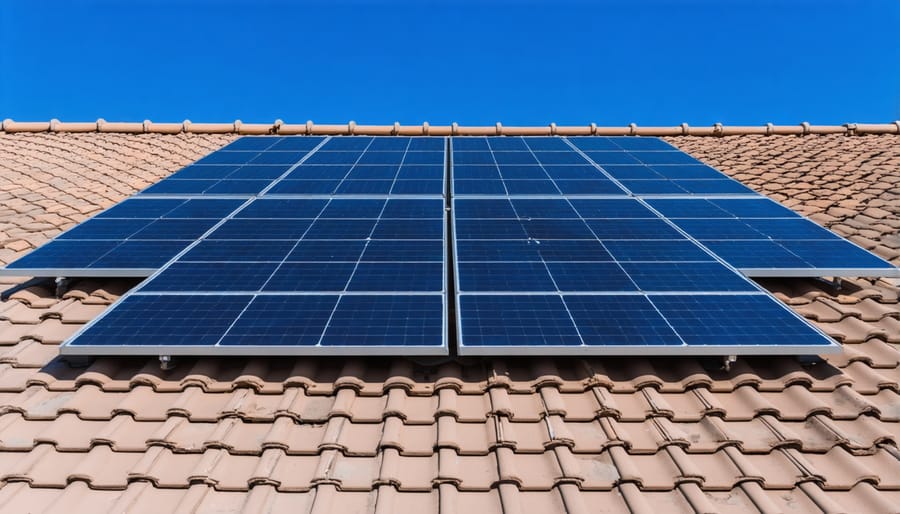
Arizona home with solar panels installed on red tile roof under clear blue sky
Arizona homeowners are increasingly turning to solar energy, but navigating financing options can be complex without the right tools.

What AI-Powered Loan Matching Actually Does

The Technology Behind the Match

AI solar loan matching platforms leverage sophisticated machine learning algorithms that work tirelessly on your behalf. These intelligent systems analyze multiple data points simultaneously—including credit scores, income verification, debt-to-income ratios, and property characteristics—to assess your creditworthiness with remarkable accuracy.

The technology doesn’t stop at evaluation. Advanced predictive models calculate your approval likelihood across different lenders before you even submit formal applications, saving you from unnecessary credit inquiries that could impact your score. The system compares interest rates, repayment terms, monthly payments, and total cost projections across dozens of Arizona solar financing providers in mere seconds.

What makes this particularly valuable for solar installations is the algorithms’ ability to factor in Arizona-specific incentives, including federal tax credits, utility rebates, and state-level programs. The machine learning continuously improves its recommendations by learning from thousands of successful loan matches, identifying which lenders consistently offer the best terms for profiles similar to yours.

This data-driven approach eliminates guesswork and human bias, ensuring you receive objective, personalized financing recommendations that align with both your financial situation and your sustainability goals—making clean energy more accessible than ever before.

Data Points That Matter for Solar Loans

AI-powered solar loan matching systems analyze multiple critical data points to determine your optimal financing options. Your credit history forms the foundation, with algorithms evaluating scores, payment patterns, and credit utilization to predict loan eligibility and interest rates. Income verification confirms your ability to manage monthly payments, while property value assessments determine loan-to-value ratios and available equity.

The AI also considers system size specifications—larger installations require more financing but generate greater long-term savings. In Arizona specifically, these systems integrate state-specific solar incentives including federal Investment Tax Credits (ITC), Arizona’s solar equipment sales tax exemption, and utility rebate programs from providers like APS and SRP. These incentives significantly reduce your net investment and improve loan terms.

Advanced algorithms process utility rate structures unique to Arizona, calculating precise energy offset projections based on your consumption patterns. The system also evaluates roof conditions, orientation, and shading to ensure accurate cost-benefit analysis. By simultaneously processing these interconnected variables, AI delivers financing recommendations that traditional lenders simply cannot match in speed or accuracy, ensuring you secure the most favorable terms for your sustainable energy investment.

Why Arizona Solar Customers Benefit From AI Matching

Time Savings and Reduced Stress

Traditional solar financing typically requires homeowners to spend weeks researching lenders, comparing rates, and submitting multiple applications—a process that often leads to confusion and decision fatigue. AI-powered loan matching transforms this experience dramatically, analyzing your financial profile and project details in seconds to present tailored financing options within minutes.

“We were dreading the loan process after hearing about our neighbor’s experience,” shares Maria Chen, a Solar Concepts client from Scottsdale. “Instead, the AI system matched us with the perfect lender in under five minutes. We had approval the same day and panels installed within weeks.”

The technology eliminates the stress of wondering whether you’ve found the best rate or if better options exist. By instantly comparing dozens of lenders—including Arizona-specific programs and federal incentives—the system ensures you’re seeing the most competitive offers available for your unique situation.

Phoenix homeowner James Rodriguez adds, “I saved countless hours I would have spent calling banks and filling out paperwork. The AI handled the heavy lifting, and I could focus on planning my solar system instead of stressing about financing.”

This streamlined approach means less time worrying about loans and more time enjoying your transition to clean, renewable energy.

Better Rates and Terms

AI-powered loan matching systems analyze hundreds of lending products simultaneously, scanning current market rates, promotional offers, and lender-specific criteria that manual research often misses. This comprehensive market analysis consistently identifies opportunities that save Arizona homeowners substantial amounts over their loan terms.

Traditional loan shopping typically compares three to five lenders, while AI platforms evaluate 20-50+ financial institutions in minutes. This expanded reach means discovering lenders offering specialized solar financing programs with rates often 0.5% to 1.5% lower than conventional options. For a $25,000 solar installation, this translates to approximately $2,000-$5,000 in interest savings over a typical 15-year term.

Beyond interest rates, AI algorithms identify favorable terms including extended repayment periods, no prepayment penalties, and flexible down payment requirements. The technology matches your specific financial profile—credit score, income level, and property characteristics—with lenders most likely to offer optimal terms. One Phoenix homeowner recently secured 3.99% financing through AI matching compared to the 5.25% rate initially quoted by their bank, saving $3,200 over the loan duration while accessing all the benefits of solar installation sooner.

How Solar Concepts Integrates AI Loan Matching

Arizona couple consulting with solar financing expert using laptop at home
Solar Concepts guides Arizona customers through the AI loan matching process with personalized consultation and expert support.

The Customer Journey: From Quote to Approval

The journey to solar financing through Solar Concepts begins with a comprehensive assessment of your energy needs and financial goals. When you reach out to our team, we immediately deploy our AI-powered loan matching platform to analyze your unique situation alongside a personalized consultation with our solar experts.

During the initial consultation, our specialists evaluate your property’s solar potential, considering roof orientation, shading patterns, and Arizona’s exceptional solar resources. Simultaneously, our artificial intelligence system processes your financial profile, reviewing factors such as credit history, income stability, and preferred payment structures to identify optimal financing solutions from our network of trusted lenders.

Within 24-48 hours, you’ll receive a customized proposal featuring multiple loan options tailored to your circumstances. Each option includes transparent details about interest rates, terms, monthly payments, and projected energy savings. Our team walks you through every scenario, explaining how different financing structures impact your long-term returns and environmental contributions.

Once you select your preferred financing option, the AI system expedites the application process by pre-populating forms and ensuring documentation completeness, significantly reducing approval timeframes. Throughout this stage, your dedicated Solar Concepts advisor remains available to address questions and coordinate between you and lenders.

The final approval typically arrives within days rather than weeks, allowing you to move forward confidently with your sustainable energy investment. This streamlined approach transforms what traditionally takes months into an efficient, transparent experience that respects both your time and financial well-being.

Real Results: Arizona Case Studies

When Maria Gonzalez decided to go solar at her 2,400-square-foot home in Scottsdale, she felt overwhelmed by financing options from multiple lenders. Through Solar Concepts’ AI-powered loan matching platform, she received a customized analysis within minutes. The system evaluated her credit profile, energy consumption patterns, and Arizona-specific incentives to match her with an optimal 8.5kW solar array financed through a 15-year loan at 4.2% APR.

“The AI platform identified a lender I’d never heard of that offered terms far better than my bank,” Maria explains. “My monthly payment is $127, which is $45 less than my previous electric bill. The system has already saved me over $2,800 in the first year alone.”

Maria’s installation included premium efficiency panels and a battery backup system. The AI matching considered Arizona’s Residential Solar Energy Tax Credit and federal incentives, calculating a seven-year payback period with projected lifetime savings exceeding $48,000. Her system now generates 13,200 kWh annually, covering 95% of her household energy needs even during Phoenix’s intense summer months.

Desert Tech Solutions, a Mesa-based software company, faced a different challenge: financing a 125kW commercial solar installation across their 15,000-square-foot facility. Traditional lenders offered standard commercial loans with rigid terms that didn’t account for their seasonal cash flow variations.

Solar Concepts’ AI platform analyzed three years of utility data, evaluated commercial financing products from 18 lenders, and recommended a structured loan with graduated payments aligned with their projected energy savings. The system secured financing at 5.8% over 12 years with payments increasing modestly as savings accumulated.

“We were approved within 48 hours for a $285,000 system,” says CFO Robert Chen. “The AI identified specialized commercial solar lenders offering accelerated depreciation benefits we hadn’t considered. Our first-year energy costs dropped by $38,000, and we’re on track for complete payback in nine years. The environmental impact matters too—we’re eliminating approximately 140 tons of CO2 emissions annually.”

Both cases demonstrate how AI-powered loan matching transforms solar adoption from a complex financial puzzle into a streamlined, optimized decision tailored to Arizona’s unique solar landscape.

What to Expect When Using AI Loan Matching

Getting started with AI loan matching is straightforward when you know what to prepare. The process typically takes 24-48 hours from initial submission to receiving personalized loan recommendations, making it significantly faster than traditional financing routes.

Document Preparation

Before beginning, gather essential financial documentation including recent pay stubs or tax returns, current credit reports, utility bills showing your energy usage, and property information. You’ll also need details about your planned solar system, including estimated system size and equipment specifications. If you’ve already received quotes from installers, having those available helps the AI provide more accurate matching. Understanding solar installation requirements beforehand ensures you’re fully prepared for both the financing and installation phases.

The Matching Process

Once you submit your information, the AI analyzes hundreds of data points including your financial profile, Arizona-specific incentives, property characteristics, and current market conditions. The system cross-references this data against lending criteria from multiple financial institutions to identify optimal matches. You’ll receive a detailed report outlining 3-5 tailored loan options with transparent comparisons of interest rates, terms, monthly payments, and total lifetime costs.

Evaluating Recommendations

Review each recommendation carefully, focusing on factors beyond just interest rates. Consider loan terms, prepayment penalties, whether the financing includes system maintenance coverage, and how different options align with available tax credits and Arizona incentives. The AI-generated report includes projections showing your break-even point and long-term savings for each option.

After selecting your preferred financing option, the platform facilitates direct connection with the lender to finalize your application, streamlining what traditionally required multiple phone calls and meetings into a seamless digital experience.

Aerial view of residential solar installation with Arizona desert mountains in background
Real Arizona homeowners are achieving significant energy savings and environmental impact through AI-matched solar financing solutions.

AI-powered solar loan matching represents a transformative breakthrough in overcoming financial barriers to clean energy adoption across Arizona. By leveraging sophisticated algorithms that analyze your unique financial profile and match you with optimal lending solutions within minutes, this innovative technology eliminates the guesswork and frustration traditionally associated with solar financing. Arizona homeowners and businesses no longer need to navigate complex loan options alone or settle for less-than-ideal terms that could delay their transition to sustainable energy.

At Solar Concepts, we’re committed to making solar accessibility a reality for every Arizonan through cutting-edge technology combined with personalized expert guidance. Our AI loan matching platform works tirelessly to identify financing solutions tailored to your specific circumstances, while our experienced team ensures you understand every aspect of your investment. The path to energy independence and environmental stewardship has never been clearer or more achievable.

Ready to discover how AI loan matching can unlock your solar potential? Contact Solar Concepts today for a complimentary consultation. Let us demonstrate how innovative financing technology, paired with our decades of Arizona solar expertise, can transform your sustainable energy goals into reality while maximizing your financial benefits.

4 Important Things You Should Know about Solar Pool Heating Systems

Enjoying a warm swim in a heated pool is delightful, but traditional heating systems can be costly due to their constant electricity use. A solar pool heating system offers a more efficient and cost-effective alternative. It harnesses solar energy to warm your pool, significantly reducing electricity costs. 

This eco-friendly solution lets you comfortably enjoy your pool without the high expense of conventional heating methods.

How It Works

A solar pool heater is a straightforward and efficient way to heat your pool using solar energy. Here’s a brief overview of how it works:

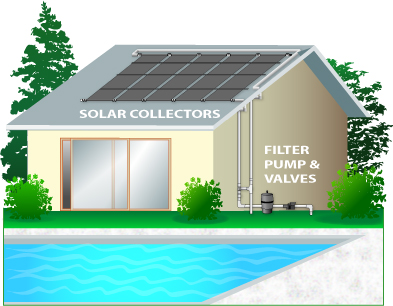
  1. The automatic control valve component directs water through a solar collector where it gets heated by the sun’s energy and then back into your pool.
  2. As the water circulates, it passes through the heater and warms up to your desired temperature before returning to the pool.
  3. The solar heater typically works in conjunction with your pool’s filtration system, continuously heating the water just like the filter removes contaminants.
  4. The heater captures solar rays and converts them into energy to heat your pool. The entire process is efficient and doesn’t require much intervention once professionally installed. 

Overall, it’s a seamless, hands-free solution for maintaining a comfortable pool temperature using renewable energy.

Use and Maintenance

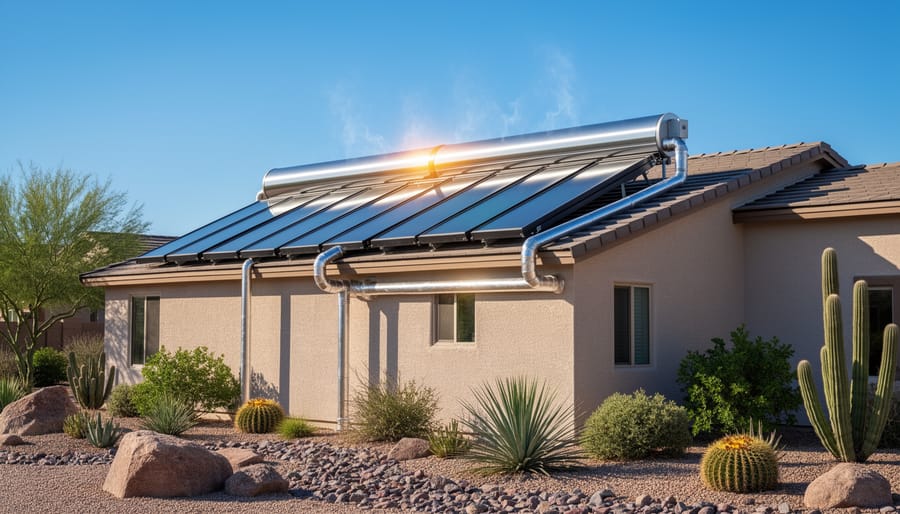
Solar pool heating systems are low-maintenance and efficient, ideal for year-round use in sunny areas like Arizona. They require minimal attention, generally just an annual professional inspection and maintenance, similar to other pool heating systems. 

Once installed by our team, they’re easy to manage with only occasional adjustments needed for temperature or settings. 

These systems work in tandem with your pool’s filtration system but are less hands-on, offering a straightforward and user-friendly experience.

The Installation Process

Once you’re ready to explore solar heating for your pool, our team will then offer a free, no-obligation home consultation to discuss your options and customize the installation for your specific needs. 

We’re equipped to install on any roof type and ensure a smooth process tailored to your home. After installing the solar heating system, we’ll connect it to your pool, get it up and running, and teach you how to operate it with ease.

Throughout the process, we provide detailed information and support, ensuring you’re confident in using and maximizing your new system. 

Plus, if you’re considering a whole-home solar system, we can guide you on how this could further enhance your home’s energy efficiency.

Benefits of a Solar Heating System

If you’re fond of swimming, a solar pool heating system is a smart investment due to the several benefits it offers. Here are some of them:

  • Energy Cost Savings – These systems won’t increase your electricity bills, allowing you to enjoy a warm pool without added energy costs.
  • Durability and Warranties – Solar pool heaters are long-lasting and often come with warranties, offering peace of mind. Regular maintenance can further extend their lifespan.
  • Low Maintenance and Ease of Use – They are user-friendly and require minimal upkeep, functioning efficiently behind the scenes.
  • Environmental Benefits – Solar heaters help reduce your environmental footprint, allowing you to enjoy your pool responsibly.
  • Tax Incentives – In Arizona, these systems are eligible for tax incentives, significantly reducing the cost of installation.

Most importantly, a solar pool heating system transforms your pool from a seasonal luxury to a year-round amenity. Imagine a warm, inviting swim even on a cool fall day – it’s a great way to maximize the use of your pool.

Frequently Asked Questions about Solar Panels

Moving to solar energy is a great step towards reducing energy bills and your carbon footprint, but it can seem like a significant undertaking. Concerns about costs, sunlight availability, and the process of switching are common among homeowners. 

While the decision can feel overwhelming, embracing solar power brings substantial benefits like energy independence and environmental sustainability. It’s important to address common questions about the costs, installation, and potential savings to make an informed decision and see how solar can positively impact your home.

Here, we’ll look at the frequently asked questions with regard to going solar.

What are the Costs of Installing Solar Panels?

The cost of solar energy systems is a key question for many, and it varies based on several factors. System size, type, and efficiency are factors that all play a role in determining the price. 

For an average home needing 3kW to 8kW of energy, the cost typically ranges from $15,000 to $40,000. However, it’s important to note that solar costs have significantly decreased over the past decade, often resulting in lower per-kilowatt costs, especially for larger systems.

Another way to estimate the cost is by looking at median prices per kilowatt. According to Berkeley Lab’s Tracking the Sun report, the cost ranges between $3.2 and $4.5 per kilowatt. 

However, these are median prices, and they reflect a substantial drop in solar power costs – up to 61% since 2010. This decline in price suggests that solar power is likely more affordable now than many people think.

Is It Possible to Save Money on an Installation?

Yes, it’s possible. While committing to solar panel installation can feel daunting, there are tools and resources available to make it more financially accessible.

Here are some of the options available to you:

Tax Incentives

Significant savings can be achieved through tax incentives. Both the federal government and state governments, like Arizona, offer tax credits. These credits are applied to your tax return for the year following the installation of a qualified solar panel system.

Financing Options

To ease the financial burden, various financing options are available. These can spread out the cost over time, preventing the need for a large upfront capital investment.

Long-term Savings

Consider the long-term financial benefits. Solar panels reduce or eliminate your dependence on traditional electricity, leading to considerable savings over time. 

Despite the initial cost, solar power is an efficient energy source, and there’s no significant change in how you use electricity in your home – everything from lights to appliances operates as usual.

Ease of Management

Solar systems are user-friendly and easy to manage which adds to their appeal. While the initial investment in solar can seem substantial, tax benefits, financing options, and long-term savings make it a viable and economically sound option.

What are the Factors Affecting the Cost of Solar Panels?

The cost of solar panels for your home can vary widely due to several factors which are as follows:

  • State and Federal Incentives – Tax credits can significantly reduce your overall expenses. For instance, you might be eligible for a federal tax credit covering up to 26% of the cost and an Arizona state tax credit of up to $1,000 per home.
  • Panel Cost – Prices of solar panels vary based on manufacturers, with different price points and quality levels.
  • Your Roof – The size and orientation of your roof impact installation costs. A larger, sun-facing roof may require fewer panels.
  • Solar Panel Characteristics – The efficiency of solar panels matters. More efficient panels need less sunlight to generate electricity and are better at converting sunlight.
  • Your Energy Needs – The amount of energy you require will determine the type and number of panels needed.
  • Additional Costs Beyond Panels – Installation involves more than just the panels. Hardware, energy storage batteries, and labor costs also contribute to the total expense. These are typically included in installation packages, but the specific solutions chosen can affect the overall cost.

Understanding these factors can help you get a clearer picture of the investment required for solar power in your home.

How to Get Started with an Installation Project?

Understanding the various factors that influence solar panel pricing is just the first step. The next move is to get a personalized estimate, which is a straightforward and informative process. Here’s what it typically involves:

  1. A team will visit your home to assess your energy usage patterns, roof orientation, surface area, and other relevant factors.
  2. You’ll have options to choose from different solar panel systems, each suited to varying needs.
  3. Based on your energy consumption, the team will recommend the number of solar panels required for your home.
  4. You’ll receive an estimate of how much you could potentially save on your annual electricity bills by switching to solar.

The advantage of this process is that it comes with no strings attached. There’s no cost for the estimate, nor are you under any obligation to proceed with installation afterward. 

This risk-free opportunity allows you to fully understand the potential costs and benefits of installing solar panels for your specific home situation.

7 Benefits of Solar Energy for Heating Up Your Pool

Solar energy has emerged as a sustainable and cost-effective solution for heating pools. Here, we’ll explore seven key benefits of using solar energy for this purpose:

Eco-Friendly Solution

Solar energy is incredibly beneficial for the environment, especially when used for pool heating. Traditional pool heating methods often depend on fossil fuels like natural gas or electricity, which contribute to carbon emissions and environmental degradation. 

In contrast, solar energy harnesses the power of the sun, a clean and inexhaustible energy source. By using solar panels for pool heating, you’re significantly reducing your carbon footprint. 

This shift to a more sustainable energy source is crucial in the fight against climate change. Moreover, solar energy does not produce air pollutants or water pollutants, making it a much cleaner option for your home and the planet.

Cost-Effective in the Long Run

Initially, the installation of solar pool heating systems may seem expensive. However, the long-term financial benefits are substantial. 

Once installed, the operational costs are significantly lower compared to traditional heating methods, as solar energy is essentially free. Over time, these savings can offset the initial installation costs. 

Additionally, as utility prices continue to rise, the cost-effectiveness of solar heating becomes even more pronounced. Homeowners can enjoy a warm pool without worrying about the impact of increased energy prices on their utility bills. 

This makes solar pool heating an economically sensible choice for those looking for long-term savings.

Low Maintenance

The durability and low maintenance nature of solar pool heating systems are a major plus. These systems typically have fewer moving parts than traditional heaters, which means there’s less that can go wrong. This translates to fewer repair needs and a longer lifespan for the equipment. 

Regular maintenance is usually straightforward and can often be done by the homeowner, without the need for expensive professional services. 

This ease of maintenance not only saves money but also ensures that the pool heating system remains efficient and effective for a longer period. In return, it reduces the likelihood of inconvenient breakdowns.

Increases Pool Usage

Solar pool heating significantly extends the swimming season beyond the traditional summer months. In regions with milder climates, a solar-heated pool can provide comfortable swimming conditions almost year-round. 

This extended usage makes your pool a more valuable and enjoyable feature of your home. For families, it means more time spent outdoors and in physical activity. For those who use their pool for exercise or therapy, the extended season provided by solar heating is invaluable. 

This increased accessibility to your pool enhances the return on investment of both your pool and the solar heating system.

Quiet Operation

One of the underrated benefits of solar pool heating is its quiet operation. Traditional pool heaters, particularly gas and electric ones, can be quite noisy, which disrupts the peaceful ambiance of a pool area. 

Solar pool heaters, in contrast, operate silently. This quiet operation is particularly appealing to those who value tranquility in their outdoor spaces. It means you can relax or entertain by the pool without the disturbance of a loud heater in the background. 

This aspect is especially beneficial in residential areas where noise pollution can be a concern for homeowners and their neighbors.

Increases Property Value

Installing a solar pool heating system can increase your property’s value. As environmental awareness grows, more homebuyers are looking for eco-friendly features in homes. 

A solar-heated pool not only appeals to environmentally conscious buyers but also to those looking to save on energy costs. This feature can make your property stand out in the real estate market, potentially increasing its resale value. 

Additionally, solar pool heaters are often seen as a premium upgrade, adding a touch of modernity and sophistication to your property. This can be a key selling point in a competitive housing market.

Energy Independence

Energy independence is a significant benefit of solar pool heating. By using the sun to heat your pool, you reduce your dependence on the grid and fossil fuels. 

This independence is increasingly important as energy costs fluctuate and concerns about energy security grow. In times of power outages or energy shortages, your pool’s temperature remains unaffected. 

This self-sufficiency is not just good for your wallet but also contributes to a broader movement towards sustainable living. 

By adopting solar energy, you’re taking a proactive step in reducing the overall demand on the energy grid, which is beneficial for both the environment and the energy infrastructure.

Conclusion

Solar energy for pool heating offers a range of benefits. These advantages make it a compelling choice for pool owners looking to enhance their pool experience while also making a positive impact on the environment and their finances.

How to Pick the Right Solar Company for a Solar Installation

Choosing the right solar installation company is a crucial step in your journey toward embracing renewable energy. With the increasing popularity of solar power, the market is flooded with numerous service providers, each claiming to offer the best. 

However, not all solar installers are created equal. Making the right choice can be the difference between a hassle-free, efficient solar energy experience and a series of disappointing setbacks. 

In this guide, we’ll delve into 5 essential tips that will help you choose the right solar installation company for your needs.

Research and Reviews

Begin with thorough research. 

Dive into the local solar market and compile a list of potential solar installation companies. Once you have a list, start digging into customer reviews and testimonials. Pay close attention to what previous clients say about their experience, focusing on the quality of work, customer service, and the company’s response to issues, if any. 

Also, use platforms like Yelp, Google Reviews, and the Better Business Bureau for unbiased reviews. 

Lastly, don’t overlook word-of-mouth; personal recommendations from friends, family, or neighbors who have successfully installed solar systems can be incredibly valuable and trustworthy.

Experience and Expertise

The experience of a solar installation company is a key indicator of its reliability. 

With this, you want to look for a company with a solid history in the industry, ideally one that has weathered various market changes and technological advancements. This longevity often suggests a deep understanding of solar technology and installation nuances. 

Check if the company specializes in residential or commercial installations, depending on your requirements. 

It’s also important to verify the qualifications and certifications of their staff. A team comprised of certified professionals indicates a commitment to maintaining high standards. 

Moreover, companies that actively engage in ongoing training and development are more likely to be up-to-date with the latest solar advancements.

Licenses and Insurance

Ensuring that your chosen solar installation company is fully licensed and insured is non-negotiable. This not only protects you against liability in case of accidents during the installation process but also serves as a testament to the company’s professionalism. 

A licensed company adheres to the industry standards and regulations, which is crucial for both safety and compliance. Insurance, particularly worker’s compensation and liability insurance, is equally important. It ensures that any damage to your property during the installation or potential injuries to workers are covered, safeguarding you from unforeseen expenses. 

Keep in mind to always ask for proof of licensing and insurance before making a decision.

Product Quality and Warranty

The quality of the solar panels and equipment used by the installation company is a crucial factor. 

Ideally, you want to opt for a company that uses high-quality, durable panels and components, as these will dictate the efficiency and longevity of your solar system. Additionally, examine the warranties offered by the company. 

A comprehensive warranty that covers both the equipment and the workmanship provides peace of mind and is indicative of the company’s confidence in its products and services. 

Longer warranties often signal better quality, but make sure to read the fine print and understand what is included and for how long.

Cost and Financing Options

While cost should not be the sole deciding factor, it’s important to consider the pricing and financing options provided by the solar installation company. 

Be wary of quotes that seem too good to be true, as they may indicate subpar equipment or service. At the same time, the most expensive option isn’t necessarily the best. 

Seek detailed quotes from multiple companies to compare prices and understand what’s included in each package. Additionally, inquire about financing options, rebates, and incentives that can make the installation more affordable. 

A reputable company will be transparent about costs and willing to explain the various financing avenues available to you.

The Bottom Line

In the end, choosing the right solar installation company is a decision that requires careful consideration. Remember, the goal is to find a reliable partner who will guide you through the process of going solar by offering quality service and support long after the installation is complete. 

Taking the time to follow these steps will lead you to a solar installation company that not only meets your needs but also contributes to a positive and sustainable future with solar energy.

The Basics of Solar Energy: A Comprehensive Guide

While the concept of solar power is widely known, the process of converting solar energy into usable electricity is less understood. 

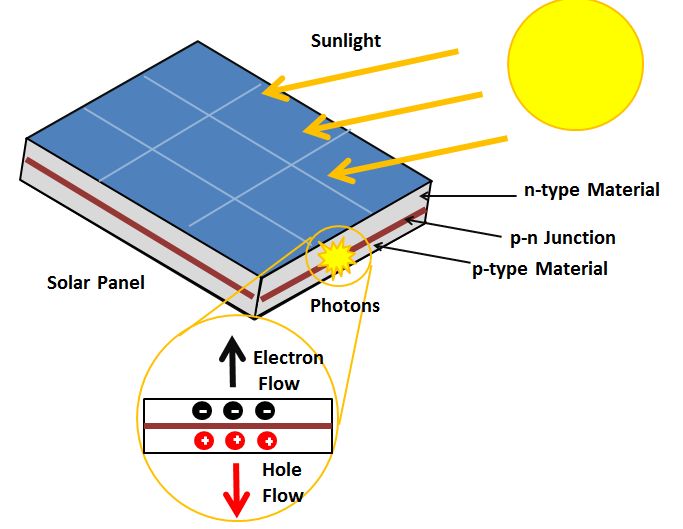
Solar panels, which are made up of photovoltaic cells, capture sunlight. These cells, typically silicon-based, generate electricity when sunlight excites their electrons. This electricity can then be used directly, stored, or fed into the power grid, making solar panels a key tool in sustainable energy production.

In this guide, we’ll have a look at how exactly solar energy works.

Understanding Sunlight and the Photoelectric Effect

Have you ever thought about the composition of a ray of light? 

Well, visible light is made up of elementary particles called photons. These unique particles are massless, carry no charge, and travel at the speed of light. 

So, when you witness the sun shining, what you’re actually seeing is a vast influx of photons bombarding the Earth. This influx of photons is the very source of energy that solar installations capture and convert into usable electricity for buildings. 

This process of harnessing light’s natural energy is at the heart of solar power technology. Solar power harnesses the photoelectric effect, which is a natural phenomenon discovered in 1887. This is crucial to the development of quantum physics. 

This effect occurs when sunlight’s photons hit a solid material, causing it to release electrons which essentially generate electricity.

The first functional photovoltaic (PV) cell was developed in the 1950s at Bell Laboratories in New Jersey. PV cells are made using silicon and other semiconductor materials, which conduct electricity under certain conditions. 

A typical PV cell contains two layers of silicon crystals, each doped with different substances – boron and phosphorus. The boron-doped layer has a positive charge, while the phosphorus-doped layer carries a negative charge. 

This arrangement allows the cell to create an electric current, laying the foundation for modern solar power technology.

Installation of Solar Panels

A solar panel is comprised of numerous photovoltaic (PV) cells. When these cells are exposed to sunlight, electrons in the silicon within the cells get dislodged, creating an electric current. This current is then conveyed to a power inverter, transforming it into alternating current (AC) suitable for home or business use. 

This process is straightforward, efficient, and can be repeated continuously.

The advantages of using solar power as an alternative energy source are significant. Solar energy is not only free and environmentally friendly, but it also avoids major ecological risks. For homeowners, it’s an increasingly cost-effective option, particularly with various government incentives available to lessen the financial burden of solar equipment acquisition. 

Moreover, the growing popularity of solar energy as a renewable source reflects its increasing adoption nationwide, making it a top choice for those considering sustainable energy solutions.

Saving Money in the Long Run

Many homeowners choose to go solar primarily because it can significantly reduce their monthly electricity bills. 

A typical household consumes a considerable amount of energy, and a solar installation can provide additional energy to supplement what’s drawn from traditional sources.

The amount you can save with solar energy varies based on several factors. These include your geographical location and the amount of sunlight it receives, the size of your household, and your overall energy consumption. In a sun-rich state like Arizona, for instance, the savings can be substantial. 

An estimate suggests that an Arizona homeowner might save around $16,866 over a 20-year period with a solar installation.

This potential for long-term savings, combined with the environmental benefits of using a clean, renewable energy source, makes investing in a home solar installation an attractive proposition. It’s not just about cutting costs; it’s also about making a sustainable choice for the future.

4 Reasons a Home Solar Installation is Worth Considering

We are indeed living in what could be called the “age of solar”. Solar energy is rapidly becoming a dominant renewable energy source in the United States, and the popularity of solar installations is at an all-time high. 

More homeowners are recognizing the benefits of harnessing solar power for their energy needs. Additionally, many states are introducing incentives, making the transition to solar energy more feasible and appealing for residents.

If you’re considering going solar, you might have questions about the practicality and value of such an investment. And as a way to answer those questions, here are the 4 main reasons why you might consider installing solar panels at your house:

It’s a Free and Reliable Energy Source

For first-time solar customers, one of the primary concerns is often the reliability of solar energy. Solar power, in reality, offers a steady and consistent energy source that can effectively complement your utility-provided energy. 

Once installed, solar panels require minimal maintenance and promise to deliver high performance for many years.

The key to maximizing the benefits of solar energy lies in professional installation. Ensuring that your solar panels are installed by a licensed and experienced professional is crucial. This not only guarantees the system’s efficiency and safety but also ensures that it’s optimized for your specific energy needs and property characteristics. 

You Get Access to a Wide Variety of Incentives

The financial incentives for installing solar panels in your home are among the most compelling reasons to go solar. The federal government supports this shift towards renewable energy by offering a substantial 30 percent income tax rebate for solar installations. 

Additionally, for residents of Arizona, installing solar panels qualifies for a $1,000 state tax rebate, further enhancing the affordability of solar energy.

For example, consider the cost of a solar installation in Arizona at $12,500. After applying the 30 percent federal rebate and the $1,000 state tax rebate, the actual cost of the installation drops significantly to $7,750. 

This reduction makes solar energy not only an environmentally sound choice but also a financially smart one, offering considerable savings on the initial investment. 

Such incentives are a major factor in making solar power an increasingly attractive option for homeowners looking to reduce their energy costs and environmental footprint.

It Massively Reduces Your Environmental Impact

A solar installation can bring multiple advantages to your home, one of the most impactful being its positive effect on the environment. Using solar power at home significantly reduces your environmental impact for the following reasons:

  • Installing solar panels can enhance the value of your property, making it more attractive in the real estate market.
  • With a roof installation, solar panels can also serve as an additional layer of protection for your roof, potentially extending its lifespan.
  • Solar energy is a clean energy source that’s free from the burning of fossil fuels. This means that unlike traditional energy sources, it doesn’t produce harmful emissions.
  • By using solar energy, you significantly lower your home’s carbon footprint, contributing to a reduction in overall greenhouse gas emissions.

Investing in a solar installation is a solid step towards creating a more eco-friendly household. It allows you to harness renewable energy, reducing reliance on non-renewable energy sources and making a positive impact on the environment. 

If sustainability and environmental conservation are important to you, solar power is an excellent avenue to explore.

It Helps You Save a Lot on Utility Bills

Lastly, switching to solar energy entitles you to significant savings on monthly electricity bills. Since solar installations provide additional energy that works alongside traditional energy sources, they can reduce overall energy costs. 

That said, the amount of savings from solar power varies depending on several factors such as:

  • Geographical Location – The amount of sunlight your area receives plays a crucial role in determining solar efficiency. More sunlight means more solar energy generation.
  • Household Size and Energy Consumption – The size of your household and your typical energy usage will influence how much solar energy you can utilize and save.
  • Size and Efficiency of Solar Installation – The capacity and efficiency of your solar panel system also determine the amount of energy produced and the potential savings.

For example, in Arizona, where sunlight is abundant, homeowners who invest in solar installations can expect significant savings. Over a 20-year period, an Arizona homeowner might save approximately $16,866, according to one estimate. 

This figure illustrates the long-term financial benefits of solar energy, making it an appealing option for those looking to reduce their energy costs and invest in sustainable living.

5 Technical Requirements You Need to Know for a Successful Solar Installation

Solar power is an eco-friendly choice that will help you significantly lower your carbon footprint. Additionally, solar equipment typically requires minimal maintenance and cleaning. 

Once you’ve made the initial investment in solar installation, you’ll likely see a reduction in your energy bills, making it a cost-effective decision in the long run.

That said, if you’re considering solar power, you might be curious about whether your property is suitable for a solar installation and what the process entails. Factors like the amount of sunlight your property receives, the condition and orientation of your roof, and local regulations are important considerations. 

If you’re completely new to this endeavor, here are the necessary technical requirements you should know about:

Your Type of Roof

Solar panel installations are typically mounted on the roof as this location generally receives the most sunlight throughout the day. 

In line with that, the most suitable roofs for solar installations are those made from durable materials like asphalt, concrete, or metal. Before you start, you should first make sure that your roof is in excellent condition – a leaking or unstable roof can pose significant challenges for a solar setup.

Another important consideration is the age of your roof. Ideally, your roof should be relatively new. If you anticipate needing a roof replacement soon, it might be wise to complete that before installing solar panels. 

This is because installing solar panels on an older roof can lead to additional costs and complications if you need to remove and reinstall them during a roof replacement.

If you’re uncertain about your roof’s suitability for a solar installation, it’s a good idea to consult with your solar contractor. They can assess your roof and advise you on whether it meets the technical requirements for a successful solar panel installation.

The Type of Solar Equipment that You Need

The availability of solar equipment for both residential and commercial customers is greater now than ever before, with a diverse range of solar installation options on the market. This variety can make it challenging to determine the most suitable solar solution for your property.

Instead of navigating this choice alone, consulting with an experienced solar contractor is a wise decision. They can provide expert guidance tailored to your specific needs, ensuring you invest in high-quality equipment that aligns with your energy requirements and property characteristics. 

By seeking professional advice, you can be confident that your solar investment is not only of top quality but also perfectly matched to your unique needs.

The Amount of Sunlight Your House Needs

When considering solar installation, it’s only natural to question whether your home receives enough sunlight to justify the investment. 

A straightforward way to gauge this is by taking a walk around your property to check for significant shading issues. This can help you spot any large trees that might need trimming or removal to enhance sunlight access.

Typically, homes without major shading receive sufficient sunlight to greatly reduce or even completely offset their electricity bills. If your property is on a larger lot, there are additional options like ground-mounted solar arrays or solar carports. 

These not only generate power for your house but can also provide shaded parking or outdoor space.

If you don’t have obvious shading issues, like a large tree close to your house, it’s likely that your home gets plenty of sun. However, for a precise evaluation, a solar consultant can conduct a detailed assessment of your property’s solar potential. They can offer expert advice on how to maximize solar energy based on the specific conditions of your home.

The Building Codes in Your Area

Solar installations are subject to specific regulations and standards, which typically include adherence to the International Residential Code (for homes) or the International Building Code (for non-residential buildings). 

The key considerations for a compliant installation include the following:

  • Following Manufacturer’s Instructions – Solar equipment must be installed according to the manufacturer’s guidelines to ensure safety and effectiveness.
  • Roof Suitability – The roof on which the solar panels are installed must be structurally capable of supporting the weight and stress of the equipment.
  • Non-Combustibility – The solar installation must not pose a fire risk, hence the importance of non-combustible materials and safe design.

To guarantee that these technical and safety standards are met,  we highly recommend opting for installation by an experienced solar contractor. DIY installation of solar panels carries the risk of improper setup, which can potentially lead to safety hazards or violations of building codes. 

Professional installers not only have the necessary expertise and tools but also understand the legal and technical requirements for a compliant and safe solar setup.

The Size of the Solar Installation

Lastly, you have to consider the appropriate size for your solar installation. This is influenced by several key factors, including the size of your household, your energy consumption, and the amount of daily sunlight your property receives. 

It’s important to find a balance – the system should be large enough to meet your energy needs without being so oversized that it generates more power than you can utilize.

The minimum size for a residential solar system is typically around 1.2 kilowatts (kW). In Arizona, most homes don’t exceed an annual energy usage of 11,000 kWh (kilowatt-hours). 

To determine the ideal size for your solar installation, a solar contractor can conduct a thorough analysis of your household’s power consumption and match it with the solar potential of your property. This tailored approach ensures your solar system is perfectly calibrated to provide sufficient power for your home’s specific energy requirements.