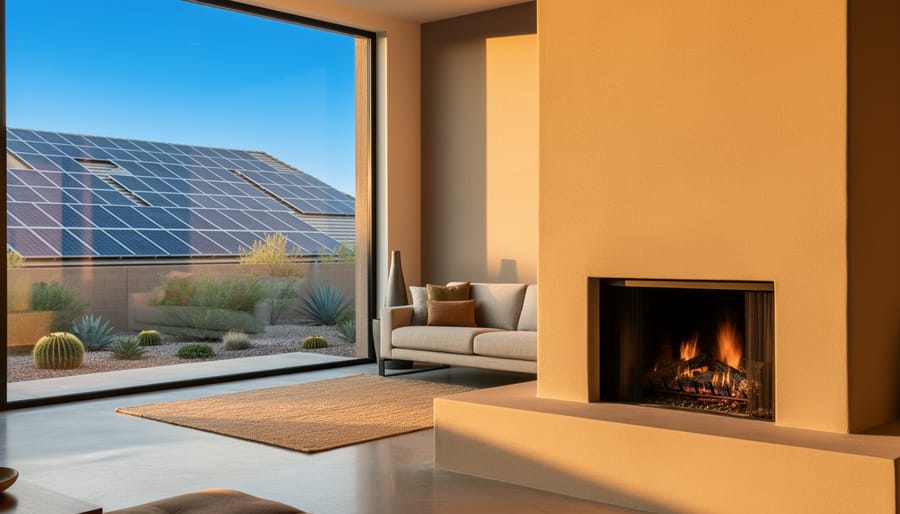
Why Your Fireplace is Costing You Thousands (And the Solar Solution)
Assess your current fireplace efficiency by calculating actual heat output versus energy loss—most traditional fireplaces lose 70-90% of heat through the chimney, making them among the least efficient heating methods available. Before considering Mason Chimney Repair services, evaluate whether solar heating alternatives could eliminate your dependence on inefficient combustion-based systems entirely.
Arizona homeowners face a unique opportunity: our abundant sunshine delivers 5.7 peak sun hours daily on average, providing sufficient solar energy to replace fireplace heating while reducing carbon emissions and eliminating ongoing fuel costs. Traditional fireplaces consume costly wood or gas, create indoor air quality concerns, and require continuous maintenance, whereas solar heating systems harness free, renewable energy with minimal upkeep requirements.
Modern solar heating technologies have evolved beyond simple passive design. Active solar air heating systems circulate warmed air throughout your home using wall-mounted collectors and low-energy fans, delivering consistent temperatures without combustion byproducts. Solar thermal storage solutions capture daytime heat in specialized materials that release warmth during evening hours when temperatures drop, directly addressing the timing mismatch between peak solar availability and heating demand.
The financial case strengthens yearly as utility rates increase. Solar heating systems typically achieve payback within 5-8 years through eliminated fuel costs and available tax incentives, then provide decades of free heating. Environmental benefits extend beyond carbon reduction—solar alternatives eliminate particulate emissions, preserve indoor air quality, and reduce forest resource consumption while maintaining comfortable living spaces throughout Arizona’s cooler months.
The Truth About Fireplace Heating Efficiency

How Traditional Fireplaces Drain Your Energy Budget
Traditional fireplaces may create ambiance, but they’re surprisingly inefficient at heating your home. Understanding these inefficiencies is the first step toward making a smarter, more sustainable choice for your Arizona property.
Wood-burning fireplaces lose between 80-90% of generated heat straight up the chimney. Even when flames are roaring, the majority of that warmth never reaches your living space. Gas fireplaces perform marginally better but still waste 50-70% of their heat output through flue exhaust.
Beyond direct heat loss, fireplaces create negative pressure effects that compromise your entire home’s heating system. As hot air escapes through the chimney, replacement air gets pulled from outside through gaps around doors, windows, and other openings. This infiltration forces your HVAC system to work harder, significantly increasing energy consumption and utility costs.
The zone heating approach of fireplaces also creates temperature imbalances throughout your home. While one room becomes uncomfortably hot, distant spaces remain cold, prompting occupants to raise thermostats and further strain heating systems. This inefficient temperature distribution wastes energy while failing to provide consistent comfort.
For Arizona homeowners and businesses seeking year-round climate control, these compounding inefficiencies translate to hundreds or thousands of dollars in wasted energy annually. The environmental impact includes unnecessary carbon emissions and resource depletion from burning fossil fuels or wood. Fortunately, modern solar heating alternatives eliminate these inefficiencies while providing reliable, sustainable warmth that aligns with both environmental values and long-term cost savings.
The Arizona Climate Factor
Arizona’s climate presents a unique paradox for homeowners considering traditional fireplace heating. With average winter temperatures remaining mild throughout most of the state, conventional fireplaces operate inefficiently during the limited periods when heating becomes necessary. Most Arizona homes require supplemental heating for only three to four months annually, making the investment in traditional fireplace systems economically questionable.
The challenge intensifies in solar-optimized homes, where modern insulation and passive solar design principles already minimize heating demands. Traditional fireplaces can actually counteract these efficiency gains by drawing warm air up the chimney, creating negative pressure that pulls conditioned air from living spaces. This phenomenon becomes particularly problematic in tightly sealed, energy-efficient homes designed to maximize solar gain.
Additionally, Arizona’s abundant sunshine—averaging over 300 days annually—creates an ideal environment for solar thermal heating systems that can seamlessly integrate with existing home designs. Unlike wood-burning or gas fireplaces that require ongoing fuel costs and maintenance, solar heating solutions harness the state’s greatest natural resource without compromising indoor air quality or energy efficiency. For environmentally-conscious homeowners, this mismatch between traditional heating methods and Arizona’s climate conditions makes exploring solar alternatives not just practical, but essential for achieving true sustainability.
Solar Heating Systems: A Superior Alternative
Solar Thermal Heating Technology
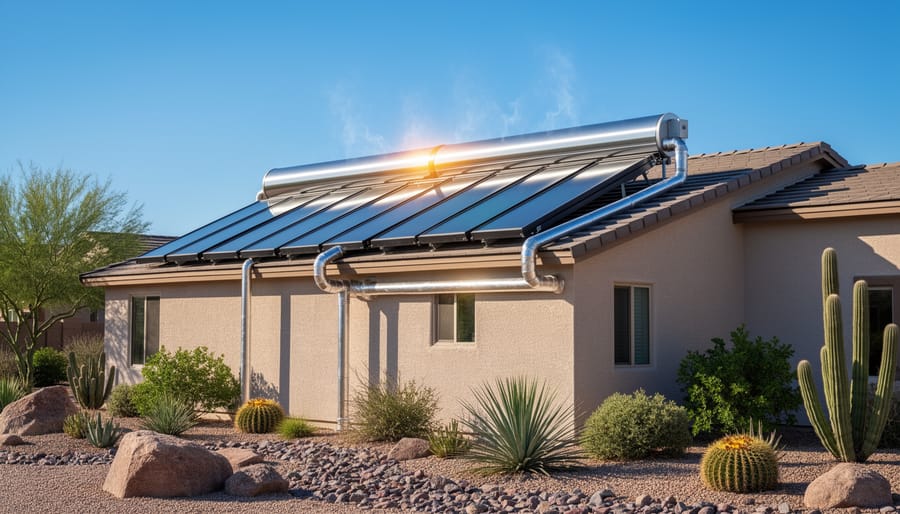
Solar thermal heating technology offers Arizona homeowners an innovative way to harness the sun’s energy for whole-home comfort. Unlike photovoltaic panels that generate electricity, solar thermal collectors directly capture sunlight and convert it into heat, providing an efficient alternative to traditional fireplace heating systems.
These collectors, typically mounted on your roof or property, contain specialized tubes or plates that absorb solar radiation. A heat-transfer fluid circulates through the system, warming as it passes through the collectors before distributing that heat throughout your home. Understanding solar energy basics helps homeowners appreciate how this technology maximizes Arizona’s abundant sunshine.
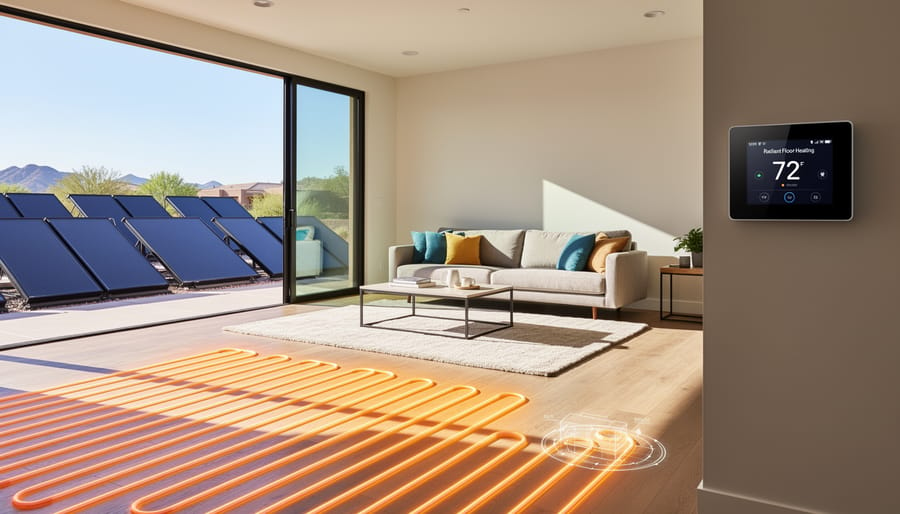
Solar thermal systems integrate seamlessly with multiple heating distribution methods. Radiant floor heating represents one of the most comfortable applications, circulating warm water through tubes embedded in your floors to create consistent, even heat from the ground up. Baseboard systems offer another option, using heated water to warm individual rooms efficiently. For homes with existing ductwork, solar thermal can integrate with forced-air systems, heating air that circulates through your vents.
One Phoenix homeowner shared their experience: “After installing solar thermal heating, we eliminated our reliance on our inefficient fireplace entirely. Our home stays consistently warm throughout winter, and our energy bills have dropped by 60 percent.”
Arizona’s climate makes solar thermal particularly effective, with peak heating needs coinciding with sunny winter days. This technology provides sustainable, cost-effective warmth while reducing your carbon footprint significantly.
Solar-Powered Heat Pump Systems
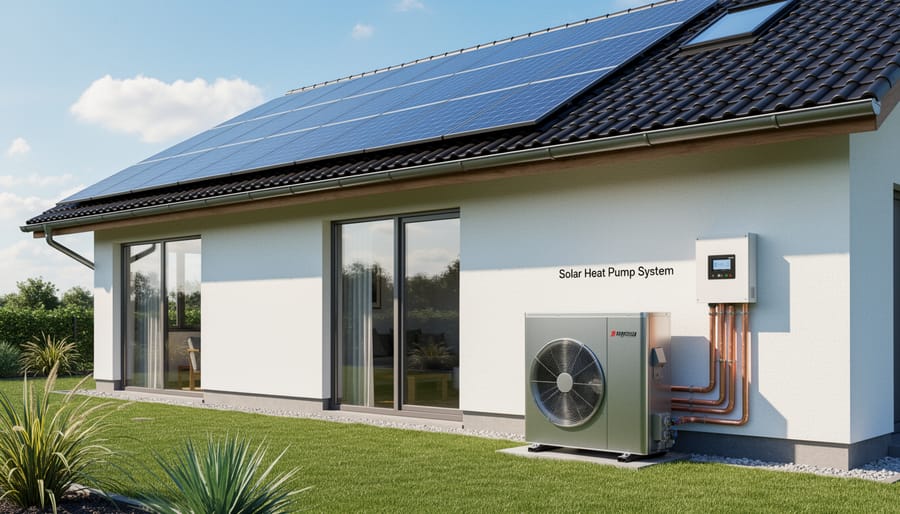
Solar-powered heat pump systems represent one of the most versatile and efficient alternatives to traditional fireplace heating, particularly suited to Arizona’s climate. By pairing photovoltaic solar panels with modern heat pump technology, homeowners can achieve comprehensive climate control that addresses both heating and cooling needs throughout the year.
Unlike fireplaces that only provide warmth during limited months, heat pumps transfer thermal energy rather than generating it through combustion. During Arizona’s cooler months, they extract heat from outdoor air and move it inside. In summer, the process reverses to provide air conditioning. When powered by solar electricity, these systems operate with minimal environmental impact and dramatically reduced utility costs.
The efficiency advantage is substantial. While traditional fireplaces typically operate at 10-30 percent efficiency, solar-powered heat pumps can achieve coefficient of performance ratings of 3.0 or higher, meaning they deliver three units of heating or cooling for every unit of electricity consumed. In Arizona’s abundant sunshine, solar panels often generate surplus power that offsets grid consumption entirely.
Consider the experience of the Martinez family in Scottsdale, who replaced their gas fireplace with a solar-powered heat pump system. “We eliminated our heating bills completely during winter months while gaining efficient cooling for summer,” they reported. “The system paid for itself faster than we anticipated, and our carbon footprint dropped significantly.”
Installation involves integrating appropriately sized solar arrays with ducted or ductless heat pump units. Professional assessment ensures optimal system capacity based on your property’s square footage, insulation quality, and specific heating and cooling requirements. The investment delivers reliable, renewable climate control that far surpasses the limited functionality of traditional fireplaces.
Efficiency Comparison: Solar vs. Traditional Fireplace Heating
Energy Output and Cost Analysis
Understanding the financial implications of switching from traditional fireplace heating to solar alternatives helps Arizona homeowners make informed decisions. Traditional wood-burning fireplaces typically produce between 20,000-40,000 BTUs per hour but operate at only 10-15% efficiency, meaning most heat escapes through the chimney. In contrast, solar heating systems paired with heat pumps deliver 30,000-60,000 BTUs per hour at efficiency rates exceeding 300%.
For Arizona homeowners, the cost comparison reveals significant savings potential. A traditional fireplace heating a 2,000 square foot home during cooler months costs approximately $800-$1,200 annually in wood or gas expenses. Solar heating systems, after initial investment, reduce operating costs to roughly $100-$200 per year in minimal electricity for circulation pumps and backup heating.
The average residential solar heating installation ranges from $15,000-$25,000, with federal tax credits covering 30% of qualified expenses. Arizona homeowners typically achieve payback within 7-10 years, after which they enjoy virtually free heating for the system’s 25-30 year lifespan. This translates to lifetime savings exceeding $30,000 compared to continued fireplace use.
One Scottsdale homeowner reported, “Our solar heating system eliminated $900 in annual fireplace costs. Within eight years, we’ll break even, and the environmental benefits were immediate.” Beyond direct savings, solar heating increases property values by an average of $20,000 in Arizona markets, making this investment both economically sound and environmentally responsible.
Environmental Impact and Sustainability
Solar heating systems deliver substantial environmental advantages over traditional fireplace options. Wood-burning fireplaces release particulate matter, carbon monoxide, and other pollutants directly into the air, contributing to poor indoor and outdoor air quality. Gas fireplaces, while cleaner than wood, still emit carbon dioxide and nitrogen oxides, adding to your home’s carbon footprint.
In contrast, solar thermal heating systems harness renewable energy from Arizona’s abundant sunshine, producing zero emissions during operation. This clean energy solution significantly reduces greenhouse gas emissions compared to fossil fuel-based heating methods. For Arizona homeowners, where sunshine averages 300 days annually, solar heating represents a particularly effective sustainable choice.
The home solar installation benefits extend beyond immediate heating needs. Solar systems contribute to grid independence and energy resilience while supporting Arizona’s renewable energy goals. Additionally, solar heating eliminates concerns about indoor air quality degradation, ash disposal, and the environmental impact of wood harvesting or natural gas extraction.
By transitioning from traditional fireplaces to solar heating, environmentally-conscious property owners can dramatically reduce their carbon footprint while maintaining comfortable indoor temperatures throughout cooler months.
Integrating Solar Heating into Your Home Energy System
Complementary Solar Solutions
Solar heating systems integrate seamlessly with other renewable energy technologies to create a comprehensive approach to home energy independence. When combined with solar photovoltaic panels, solar heating reduces your reliance on grid electricity for both power and thermal comfort. This dual approach maximizes your roof’s potential while minimizing utility costs year-round.
Solar water heating systems complement space heating by providing efficient hot water production that works in tandem with your heating infrastructure. Many Arizona homeowners discover that pairing these technologies creates synergies in energy management and system efficiency. Additionally, solar pool heating extends your swimming season while demonstrating the versatility of solar thermal technology across multiple applications.
This integrated approach to solar solutions delivers compounding benefits. As one Phoenix homeowner noted after installing multiple solar systems, “We’ve achieved 85% energy independence, and our combined savings exceed $400 monthly.” By strategically implementing complementary solar technologies, you create a resilient, sustainable energy ecosystem that adapts to Arizona’s climate while reducing your environmental footprint and energy expenses simultaneously.
Smart Home Integration and Controls
Modern solar heating systems reach their full potential when paired with intelligent control technology that optimizes energy distribution throughout your home. Smart thermostats designed for solar applications learn your heating preferences and adjust automatically based on available solar energy, outdoor temperatures, and time-of-day usage patterns. These systems can prioritize solar-heated air distribution during peak production hours while seamlessly integrating with backup heating sources when needed.
Zone control systems represent a significant advancement over traditional fireplace heating, allowing you to direct warmth precisely where it’s needed rather than relying on inefficient heat radiation from a single point. By dividing your home into separate heating zones, you can maintain comfortable temperatures in occupied spaces while reducing energy waste in unused areas. This targeted approach typically results in 20-30% greater efficiency compared to whole-home heating methods.
Real-time monitoring applications provide Arizona homeowners with detailed insights into their solar heating performance through smartphone or tablet interfaces. These platforms track energy production, consumption patterns, and system efficiency while offering predictive maintenance alerts. One Scottsdale homeowner reported, “Being able to monitor our solar heating system remotely has completely changed how we think about energy use. We’ve reduced our heating costs by 65% while maintaining perfect comfort levels throughout our 3,200 square-foot home.”
Real Arizona Homes: Solar Heating Success Stories
Scottsdale Residence: Complete Fireplace Replacement
When Jennifer Martinez purchased her 3,200-square-foot Scottsdale home in 2019, she quickly discovered that her gas fireplace heating system struggled to maintain comfortable temperatures throughout the house while driving up utility costs during Arizona’s cooler months. After consulting with solar energy specialists, she made the decision to completely replace her fireplace heating with a solar thermal radiant floor system.
The installation included evacuated tube solar collectors on her south-facing roof, paired with an in-floor hydronic heating system throughout the main living areas. The solar collectors heat a glycol solution that circulates through tubing embedded in the floor, providing consistent, efficient warmth from the ground up.
“The difference is remarkable,” Jennifer reports. “My old gas fireplace created hot spots near the unit while leaving bedrooms cold. Now, every room maintains an even, comfortable temperature without cold floors or drafty areas.”
The financial results proved equally impressive. Jennifer’s heating costs decreased by 78 percent in the first year, with the solar thermal system paying for itself within seven years through energy savings. The radiant floor heating also eliminated the indoor air quality concerns associated with gas combustion, creating a healthier living environment for her family.
Beyond comfort and savings, Jennifer appreciates the environmental impact. Her system offsets approximately 4.2 tons of carbon dioxide emissions annually compared to her previous gas heating setup, contributing to Arizona’s clean energy future while maintaining optimal home comfort.
Phoenix Commercial Property: Scaling Solar Heat
When Desert Ridge Corporate Center needed to replace their aging radiant heating system, they turned to solar thermal technology as a cost-effective, sustainable solution. The 45,000-square-foot facility now maintains comfortable temperatures throughout Arizona’s cooler months while significantly reducing operational expenses.
The installation features a rooftop solar thermal array connected to an advanced heat distribution system that serves multiple office suites and common areas. Unlike traditional fireplace heating, which would be impractical for commercial spaces, this solar solution delivers consistent, zone-controlled warmth throughout the building.
“We’ve seen a 68% reduction in heating costs since implementing solar thermal technology,” reports facility manager Rachel Torres. “The return on investment exceeded our projections, with payback occurring in just under six years. Beyond the financial benefits, our tenants appreciate the improved air quality without combustion byproducts.”
The system’s smart controls automatically optimize heat collection and distribution based on occupancy patterns and weather conditions. During peak sunshine hours, excess thermal energy is stored in insulated tanks for evening and early morning use, ensuring round-the-clock comfort without drawing from the electrical grid.
For businesses evaluating heating alternatives, this installation demonstrates how solar thermal technology scales effectively beyond residential applications, offering predictable operating costs and enhanced sustainability credentials that resonate with environmentally conscious clients and employees.
Making the Switch: What Arizona Homeowners Need to Know
Arizona Incentives and Tax Benefits
Arizona residents switching from traditional fireplace heating to solar alternatives can take advantage of substantial financial incentives that significantly reduce installation costs. The federal Investment Tax Credit (ITC) currently allows homeowners to claim 30% of their solar heating system costs through 2032, making this an ideal time to transition to sustainable heating solutions.
At the state level, Arizona offers property tax exemptions for solar installations, meaning the added home value from your solar heating system won’t increase your property taxes. Additionally, Arizona’s solar equipment sales tax exemption removes the state’s transaction privilege tax from solar purchases, delivering immediate savings on your investment.
Many Arizona utility companies provide additional rebates for solar thermal systems and solar-powered heating installations. Programs vary by provider, but customers can typically receive several hundred to thousands of dollars in rebates. Salt River Project and Arizona Public Service both maintain active incentive programs for renewable energy installations.
When combined, these incentives can cover 40-50% of your total solar heating system costs. Exploring available solar financing options makes the remaining investment even more manageable, with many homeowners achieving positive cash flow within the first few years through energy savings alone.
Choosing the Right Solar Heating Solution
Selecting the optimal solar heating solution requires careful evaluation of your specific circumstances and energy objectives. Start by conducting a thorough assessment of your home’s heating requirements, considering square footage, insulation quality, existing HVAC infrastructure, and your Arizona location’s unique climate patterns. Northern Arizona properties experiencing colder winters may benefit from comprehensive active solar heating systems, while homes in Phoenix or Tucson might find passive solar design modifications sufficient for shoulder seasons.
Evaluate your property’s solar potential by examining roof orientation, available south-facing exposure, and any shading obstacles from trees or neighboring structures. Arizona’s abundant sunshine provides exceptional opportunities for solar thermal collectors, but optimal placement remains crucial for maximizing efficiency. Professional site assessments can determine whether roof-mounted systems, ground installations, or integrated wall designs work best for your property.
Budget considerations should encompass both upfront investment and long-term operational savings. Active solar heating systems typically require higher initial expenditure but deliver substantial energy bill reductions over their 20-30 year lifespan. Federal tax credits and Arizona state incentives significantly offset installation costs, making solar heating increasingly accessible. Consider your heating usage patterns throughout the year—homes requiring consistent heating benefit most from active systems, while properties needing supplemental warmth might optimize returns with hybrid approaches.
Partnering with experienced professionals proves essential for successful implementation. Research thoroughly when choosing a solar installer, prioritizing companies with proven track records in solar thermal applications and comprehensive warranties supporting your investment.
Traditional fireplaces may offer ambiance, but they represent one of the least efficient heating methods available, losing up to 90% of generated heat through the chimney while drawing warm air from your living spaces. For Arizona homeowners seeking sustainable, cost-effective alternatives, solar heating solutions deliver superior performance with measurable financial and environmental returns.
Solar thermal systems and heat pump technology powered by photovoltaic panels provide consistent, controllable warmth without the inefficiencies plaguing conventional fireplaces. These modern alternatives eliminate ongoing fuel costs, reduce carbon emissions, and leverage Arizona’s abundant sunshine to create year-round comfort. Homeowners who make the transition typically see substantial reductions in heating expenses while increasing property value and contributing to a cleaner environment.
The decision to move beyond traditional fireplace heating represents both a practical investment and a commitment to sustainable living. Solar Concepts specializes in designing customized solar heating solutions that match your specific needs and Arizona’s unique climate conditions.
Ready to transform your home’s heating efficiency? Contact Solar Concepts today for a comprehensive energy assessment. Our team will evaluate your current heating system, calculate potential savings, and design a solar solution that maximizes comfort while minimizing environmental impact. Take the first step toward sustainable heating excellence.