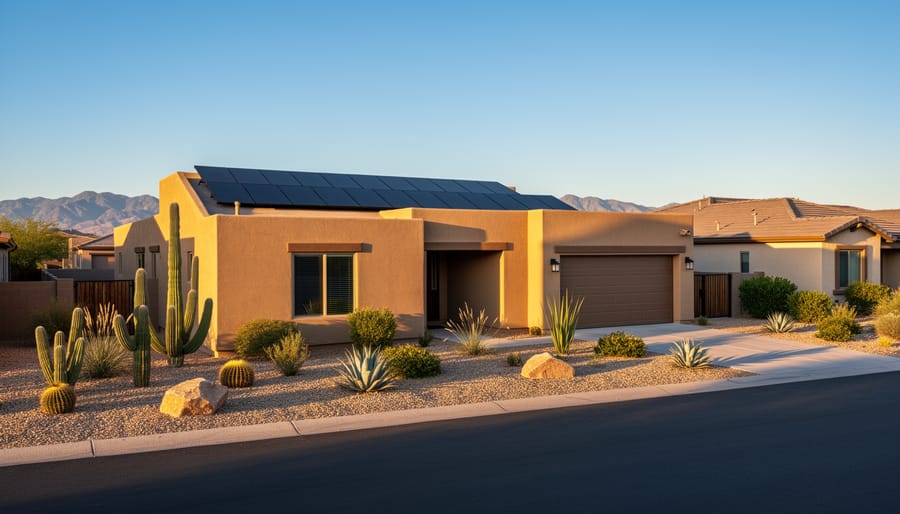
Why Solar Panels Could Make or Break Your Arizona Home Purchase
Request a complete solar system transfer agreement before closing on any Arizona home with existing panels, ensuring you understand ownership terms, warranty transfers, and any outstanding lease or power purchase agreement obligations. Arizona’s robust solar infrastructure means approximately one in four homes includes photovoltaic systems, making due diligence essential for protecting your investment, as outlined in comprehensive property guidance resources like propertysaviour.co.uk.
Verify the system’s age, performance history, and maintenance records through the seller’s monitoring data—panels typically maintain 80-85% efficiency after 25 years, but poorly maintained systems underperform significantly. Ask your real estate agent to include solar equipment inspection clauses in your purchase contract, and consult with solar energy basics resources to understand system components and expected output for your property size.
Calculate the true financial impact by reviewing at least 12 months of utility bills showing actual energy costs and solar generation credits under Arizona’s net metering policies. If the home lacks solar, obtain pre-qualification quotes from certified installers before closing—many Arizona buyers negotiate solar installation costs into their mortgage, capitalizing on the 30% federal tax credit while increasing property value by an average of 4.1%.
Confirm all permits, interconnection agreements, and utility approvals are current and transferable, as incomplete documentation can delay your ability to benefit from the system immediately. Partner with experienced solar professionals who understand Arizona’s unique regulations, monsoon-related installation considerations, and HOA requirements that affect both existing systems and new installations throughout your homebuying journey.
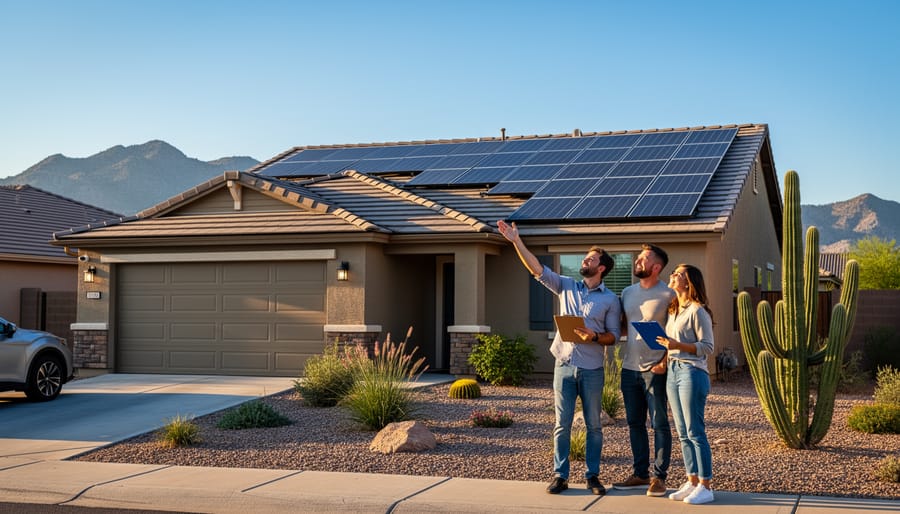
The Arizona Homebuyer’s Solar Advantage
How Solar Impacts Your Home’s Market Value
Solar installations significantly boost property values across Arizona, making them an attractive feature for homebuyers and a smart investment for sellers. Recent data from Zillow reveals that homes with solar panels sell for approximately 4.1% more than comparable non-solar properties. In Arizona’s competitive real estate market, this translates to thousands of dollars in additional equity.
The Arizona housing market shows particularly strong demand for solar-equipped homes. Properties with existing solar systems spend an average of 13% less time on the market compared to traditional homes, according to research from the National Renewable Energy Laboratory. This accelerated sale timeline reflects growing buyer awareness of the benefits of home solar, including reduced utility costs and energy independence.
Local real estate professionals report that solar installations have become a significant selling point, especially among millennial and Gen Z buyers who prioritize sustainability. Homes with owned solar systems—rather than leased equipment—command premium pricing and attract more serious offers. The appreciation rate continues trending upward as electricity costs rise and environmental consciousness grows.
One Arizona homeowner shared their experience: “When we listed our Scottsdale home with a three-year-old solar installation, we received multiple offers within days. The solar system became our biggest competitive advantage, and we sold for 5% above asking price.”
For homebuyers, properties with solar represent both immediate savings and long-term value appreciation, making them increasingly sought-after investments in Arizona’s evolving real estate landscape.
Understanding Arizona’s Solar Tax Credits and Incentives for New Homeowners
Arizona homebuyers have access to substantial financial incentives that make solar energy an increasingly attractive investment. Understanding these benefits is essential when evaluating properties with existing solar installations or planning to add solar after purchase.
The federal Investment Tax Credit (ITC) remains the most significant incentive, offering 30% of the total system cost as a tax credit through 2032. For new homeowners purchasing a property with solar panels, the transferability of this credit depends on timing and ownership structure. If you’re buying a home where solar is already installed and owned (not leased), the previous owner typically claimed the ITC. However, homeowners who install solar after purchasing their property can claim the full federal credit on their tax return.
Arizona offers additional state-level advantages that enhance solar’s value proposition. The state provides a sales tax exemption on solar equipment purchases, immediately reducing upfront costs. Property owners also benefit from solar equipment being exempt from property tax assessments, meaning your home’s increased value from solar installation won’t raise your property taxes.
Many utility companies throughout Arizona offer net metering programs, allowing homeowners to receive credits for excess energy their systems produce and send back to the grid. These credits offset electricity costs during periods of lower solar production, maximizing your long-term savings.
When evaluating homes with existing solar systems, it’s important to verify whether current incentive agreements transfer with ownership. Solar Concepts can help homebuyers navigate these financial considerations, ensuring you maximize available benefits whether inheriting an existing system or planning a new installation.
Critical Questions to Ask When Buying a Home with Existing Solar
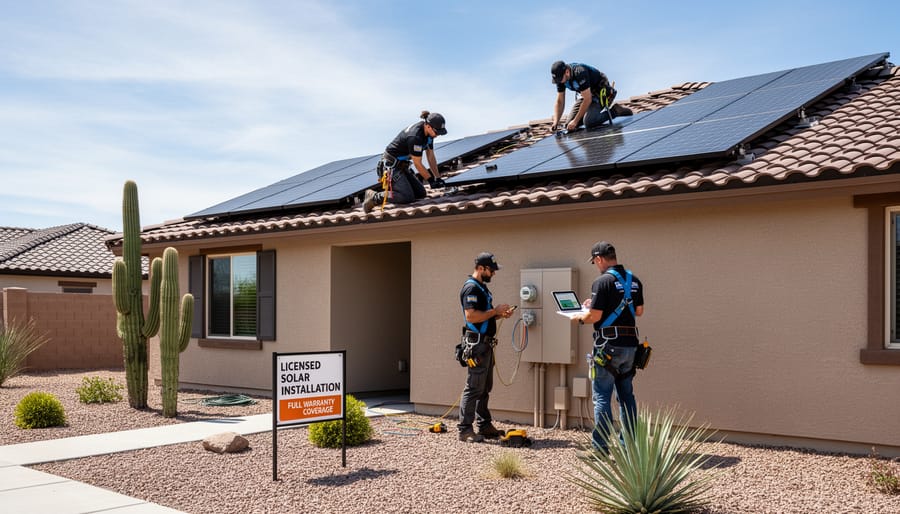
Owned vs. Leased Solar Systems: What You Need to Know
When evaluating a home with solar panels in Arizona, understanding whether the system is owned or leased is crucial to your financial future and overall satisfaction with the purchase.
Owned solar systems represent the ideal scenario for most homebuyers. When panels are owned outright, they transfer with the property, adding genuine value to your investment. You’ll immediately benefit from reduced electricity bills without any ongoing lease payments, and you’ll be eligible for the home’s increased resale value. The original owner likely claimed the federal solar tax credit, but you inherit all future energy savings and potential incentive programs. Owned systems also give you complete control over maintenance decisions and system modifications.
Leased solar systems or those under Power Purchase Agreements (PPAs) present more complexity. These arrangements require you to assume the previous homeowner’s contract, which typically runs 20-25 years. You’ll need to undergo a credit check with the leasing company, review monthly payment obligations, and understand escalation clauses that may increase your costs annually. Some leasing companies charge transfer fees, and the terms may not align with current market rates for solar energy. Additionally, future buyers of your home will face the same assumption process, potentially complicating your eventual sale.
Arizona homebuyers should request complete documentation for any existing solar system, including warranties, production history, and remaining contract terms for leased systems. Many homeowners who purchased properties with leased solar wished they had negotiated for the seller to buy out the lease before closing or adjusted the home’s purchase price accordingly. Working with solar professionals during your home evaluation helps you understand the true value proposition and avoid unexpected obligations that could impact your long-term financial goals.
Evaluating System Performance and Remaining Warranties
During your home inspection, a thorough evaluation of the existing solar installation is essential to protect your investment. Start by requesting documentation that shows the system’s age, specifications, and historical performance data. Most modern solar systems include monitoring capabilities that track energy production, allowing you to verify the panels are operating at expected efficiency levels. Compare actual output against the system’s rated capacity to identify any performance degradation.
Warranty coverage represents a significant value component of any solar installation. Solar panels typically come with 25-year performance warranties and 10-15 year product warranties, while inverters usually carry 10-12 year warranties. Request all warranty documentation from the seller and verify whether these warranties are transferable to you as the new homeowner. Some manufacturers require formal transfer procedures, and understanding this process beforehand prevents future complications.
Engage a qualified solar professional to conduct a technical assessment. They can inspect for physical damage, evaluate mounting hardware integrity, check electrical connections, and assess inverter functionality. This inspection should also identify any potential safety concerns or code compliance issues that may require remediation.
If you have common solar panel questions during the evaluation process, consulting with experienced professionals ensures you make informed decisions. At Solar Concepts, we regularly assist homebuyers in Arizona with pre-purchase solar assessments, providing detailed reports that clarify system condition and remaining warranty value. One recent client discovered their prospective home’s solar system had an untransferred warranty worth thousands in coverage—information that strengthened their negotiating position and secured peace of mind for years to come.
Adding Solar to Your New Arizona Home Purchase
Timing Your Solar Installation with Your Home Purchase
Strategic timing of your solar installation can significantly impact both your financing options and overall savings. Understanding when to go solar relative to your home purchase allows you to maximize benefits while minimizing complications.
If you’re purchasing a home without existing solar, consider waiting 30-60 days after closing before installing a system. This approach offers several advantages: you’ll have established homeownership, potentially secured better mortgage rates without solar financing complicating the loan process, and had time to analyze your actual energy consumption patterns in your new home. Additionally, waiting allows you to bundle solar financing into a home equity loan or line of credit, often at more favorable rates than standalone solar loans.
However, installing solar before your first mortgage payment can help you start saving immediately on utility costs, offsetting your new housing expenses from day one. Arizona’s abundant sunshine makes this particularly attractive, as your system begins generating returns quickly.
Seasonal considerations also matter in Arizona’s solar market. Spring installations, completed before summer’s peak energy demand, allow you to avoid the highest electricity rates when your system is already producing maximum output. Conversely, fall installations may offer promotional pricing as contractors prepare for slower winter months.
One Solar Concepts customer shared: “We installed our system two months after closing and appreciated having time to understand our home’s energy needs first. The data helped us size our system perfectly.”
Consult with experienced solar professionals early in your homebuying journey to develop a personalized timeline that aligns with your financial goals and Arizona’s seasonal patterns.
Working with Licensed Solar Providers During the Buying Process
Partnering with experienced solar professionals can streamline your home purchase and ensure a successful solar integration. When considering solar during your home-buying journey, choosing a solar installer with local expertise in Arizona’s unique conditions makes all the difference.
Before closing on your new home, schedule a pre-purchase assessment with licensed solar providers like Solar Concepts. This evaluation examines your roof’s condition, sun exposure, and electrical infrastructure to determine optimal system sizing and placement. If the property has existing solar panels, professionals can verify equipment warranties, assess system performance, and identify any necessary upgrades or repairs.
During the negotiation phase, solar experts can provide written estimates that help you understand the financial implications and potentially negotiate credits with sellers for any solar-related issues. These assessments typically take 1-2 hours and provide comprehensive reports you can share with your real estate agent and lender.
Post-closing timelines vary based on your specific situation. For new installations, expect 4-8 weeks from contract signing to system activation, including design finalization, permit approvals, installation, and utility interconnection. Licensed providers handle all permitting and utility coordination, ensuring compliance with Arizona regulations and homeowner association requirements.
One Arizona homeowner shared, “Working with Solar Concepts before closing gave us confidence in our investment. They coordinated everything seamlessly, and we were generating clean energy within six weeks of moving in.” This proactive approach protects your investment while accelerating your transition to sustainable solar power.
Real Arizona Homebuyers: Solar Success Stories
Real Arizona homeowners have discovered that thoughtful solar planning during the home purchase process leads to significant long-term benefits. Their experiences provide valuable insights for prospective buyers navigating similar decisions.
The Martinez family from Scottsdale purchased a home with an existing leased solar system in 2023. “We were initially concerned about assuming the solar lease, but after reviewing the contract terms and verifying the system’s production history, we realized it was actually saving the previous owners over $150 monthly,” shared Rebecca Martinez. “We worked with solar experts to understand our obligations, and now we’re enjoying those same savings without any upfront investment.”
In contrast, the Chen family in Chandler bought a home without solar and immediately began planning their installation. “We factored solar into our home budget from day one,” explained David Chen. “By waiting just three months after closing to install our system, we qualified for the federal Investment Tax Credit and were able to design a system perfectly sized for our family’s energy needs. Our electricity bills have dropped by 85 percent, and we’re contributing to Arizona’s clean energy future.”
First-time homebuyer Sarah Thompson in Tempe encountered a unique situation when her dream home included a fully-paid solar system. “The sellers transferred ownership of their system to us at closing. After a professional inspection confirmed everything was functioning optimally, we realized we were getting a home that essentially pays its own electricity bills. It added tremendous value to our purchase.”
These success stories underscore the importance of conducting proper due diligence, understanding contract terms, and consulting with experienced solar professionals. Whether inheriting an existing system or planning a new installation, Arizona homebuyers who approach solar strategically position themselves for decades of energy savings and environmental stewardship.
Working Solar into Your Home Financing Strategy
Integrating solar energy into your home financing strategy requires thoughtful planning from the outset of your homebuying journey. Arizona homebuyers should consider solar as a core component of their total homeownership costs rather than an afterthought, as this approach can unlock significant financial advantages and long-term savings.
Energy-Efficient Mortgages (EEMs) represent one of the most valuable tools for incorporating solar into your financing plan. These specialized loans allow you to finance energy improvements, including solar installations, as part of your primary mortgage. The anticipated energy savings often offset the slightly higher monthly payment, while the increased home value provides additional equity. FHA and conventional loan programs both offer energy-efficient mortgage options that recognize solar’s contribution to reduced utility expenses.
When budgeting for a home with solar or planning a post-purchase installation, work with lenders who understand how to evaluate solar systems within the broader financial picture. Some lenders will consider projected energy savings when calculating your debt-to-income ratio, potentially qualifying you for a larger loan amount. This recognition of solar’s financial impact demonstrates the growing mainstream acceptance of renewable energy in residential real estate.
Exploring various solar financing options early in your home search positions you for success. Whether you choose to purchase solar outright, finance through your mortgage, or arrange separate solar financing, understanding these pathways enables informed decision-making. Many Arizona homebuyers discover that including solar in their initial financial planning actually reduces their total monthly housing expenses compared to relying solely on traditional electricity sources.
Solar Concepts has helped numerous Arizona families navigate this integration successfully, with clients reporting average monthly savings of $150-200 on their combined housing and energy costs after incorporating solar into their home financing strategy.
Incorporating solar energy considerations into your Arizona homebuying journey represents a strategic investment in both your financial future and environmental stewardship. Whether you’re evaluating a property with an existing solar system or planning a post-purchase installation, understanding the solar landscape gives you a competitive advantage in today’s real estate market.
The long-term benefits are substantial. Arizona homeowners with solar systems typically enjoy reduced electricity costs for decades, protection against rising utility rates, and increased property values. By conducting thorough due diligence on existing systems or consulting with solar professionals before closing, you position yourself to maximize these advantages from day one.
The environmental impact of your decision extends far beyond individual savings. Each solar installation contributes to Arizona’s clean energy goals, reduces carbon emissions, and helps preserve our state’s natural beauty for future generations. As an environmentally-conscious buyer, you’re joining a growing community of Arizonans committed to sustainable living.
Taking action is straightforward. Whether you need a pre-purchase assessment of an existing system or guidance on adding solar to your new home, partnering with experienced professionals ensures you make informed decisions. Solar Concepts specializes in helping Arizona homebuyers navigate every aspect of solar energy, from system evaluations to custom installations designed for your specific property.
Contact Solar Concepts today to schedule a consultation and discover how solar energy can enhance your Arizona homeownership experience while contributing to a cleaner, more sustainable future.
Leave a Reply